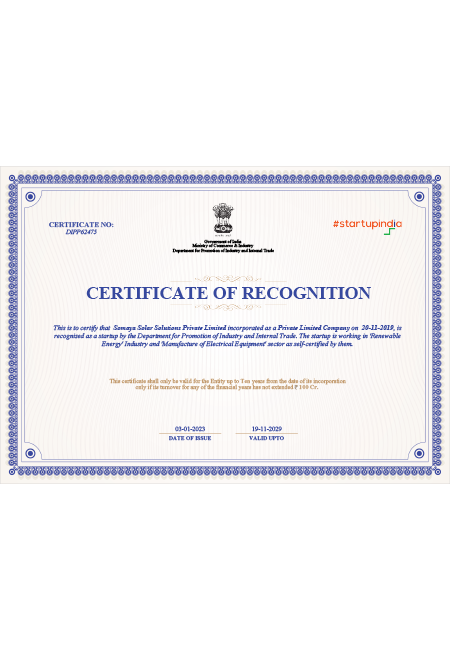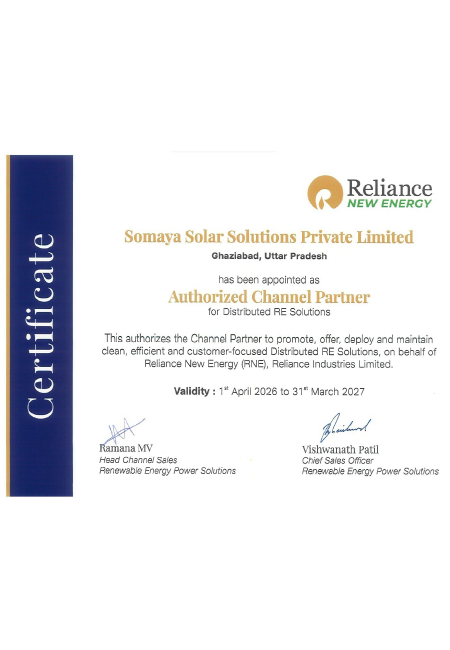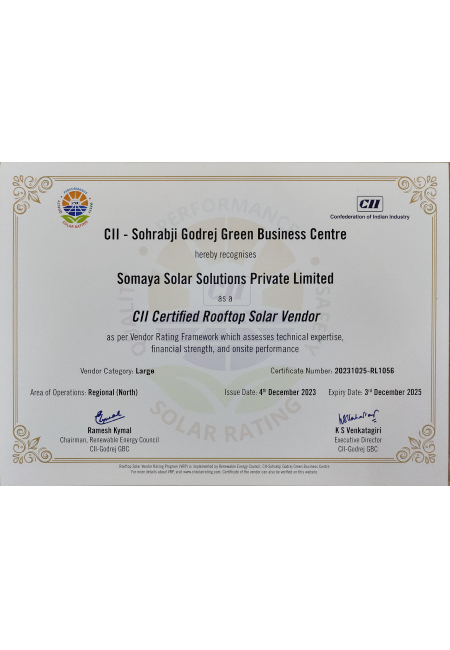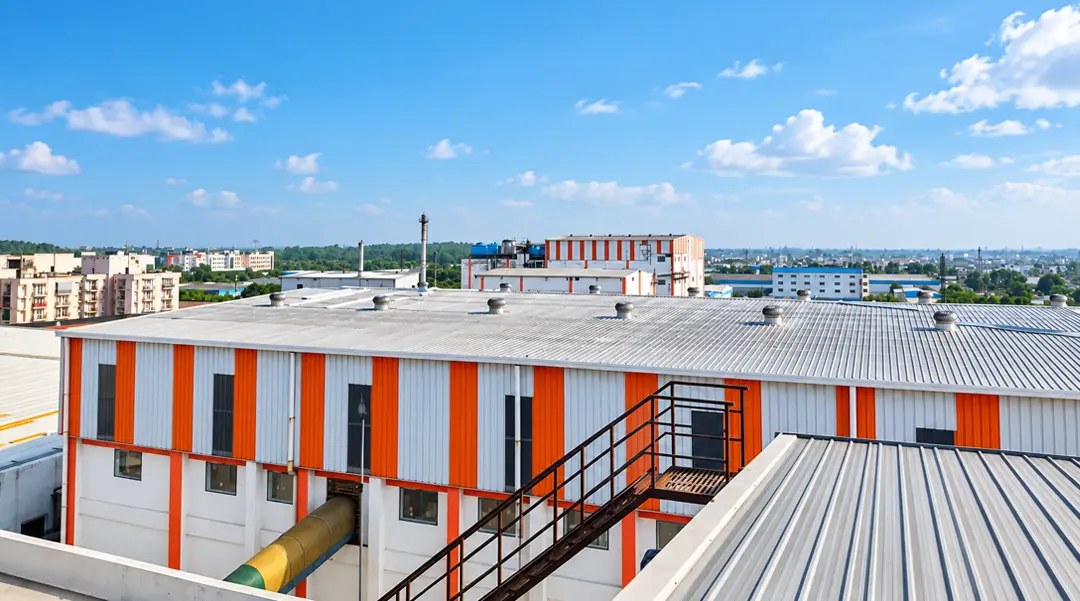
Somaya Solar Solutions Limited provides commercial and industrial solar installation services for factories, manufacturing units, warehouses, commercial buildings and institutional facilities in Saharanpur. Its documented experience includes 1 MW to 3 MW rooftop solar projects involving equipment supply, installation, testing, commissioning and contracted operations and maintenance.
Commercial and industrial rooftop solar projects require coordinated planning around electricity consumption, usable roof area, structural suitability, electrical integration, site access and ongoing business operations. Somaya's relevant project experience includes installations across paper manufacturing, pharmaceuticals, fertilizer and other industrial environments, with execution requirements defined according to each project's technical and commercial scope.
Planning a Commercial or Industrial Solar Installation in Saharanpur?
Share your facility type, electricity requirements, available rooftop area and proposed project capacity with Somaya Solar.
Request a C&I Solar Project Scope Review
Commercial Rooftop Solar Installation for Saharanpur Businesses
Commercial rooftop solar installation in Saharanpur must reflect how individual business properties use electricity and manage their building infrastructure. Offices, warehouses, institutional facilities and business campuses can differ in daytime demand, roof layout, metering arrangements and operational restrictions.
An initial installation assessment considers usable rooftop space, shading, structural suitability, electrical connections, safe access and the responsibilities of building owners or facility managers. These factors help establish an appropriate project configuration before installation planning begins.
Solar Installation for Commercial Buildings and Offices
Office and business properties may have substantial daytime electricity consumption from air conditioning, lighting, ventilation, lifts, equipment and other building systems.
A rooftop solar proposal should consider the property's consumption profile, installation area, connection arrangements and maintenance access. In multi-occupancy buildings, ownership and electricity-metering arrangements may also influence the implementation approach.
Solar Installation for Warehouses and Logistics Facilities
Warehouses may offer large roof surfaces, but usable area depends on roof construction, existing structures, skylights, ventilation equipment and safe access.
For logistics facilities, installation planning may also need to account for goods movement, loading areas and restrictions on equipment lifting. Large roof area should not automatically be treated as evidence of a structurally suitable or commercially viable solar installation.
Solar Installation for Institutional and Business Campuses
Institutional facilities and business campuses may operate across several buildings or electricity connections.
Solar planning should establish the relevant rooftops, consumption arrangements, electrical infrastructure and applicable metering options before a system configuration is finalised.
Industrial Solar Installation in Saharanpur for Factories and Manufacturing Units
Industrial solar installation requires particular attention to the working conditions of a factory or production facility.
The installation area may be located above active manufacturing operations, near industrial equipment or on rooftops that were not originally designed with solar modules in mind. Material handling, structural loading, electrical integration and access restrictions can therefore influence the execution plan.
For industrial facilities in Saharanpur, the installation strategy should be based on the actual site rather than a standard equipment package.
High Roofs and Industrial Structures
Industrial buildings may have elevated metal-sheet roofs, RCC structures or complex roof layouts.
Before installation, the project team needs to establish practical access conditions, mounting requirements, roof suitability and safe material-handling arrangements. Where structural verification is necessary, the responsible qualified party and required checks should be identified.
Solar Installation Around Production Activities
Installation at an operating facility may require coordination with production schedules, movement of workers, loading areas and electrical shutdown restrictions.
A well-defined execution plan should identify work zones, material movement, access arrangements, safety requirements and any activities that could affect existing operations.
Industrial Electrical Integration
Industrial facilities may have LT or HT electrical systems, substantial daytime loads and existing distribution infrastructure.
The technical scope should establish how the proposed solar system interfaces with the facility's electrical arrangement, including applicable protection, metering and interconnection requirements.
Environmental Conditions and Equipment Protection
Certain industrial environments expose solar structures and equipment to dust, fumes, moisture or potentially corrosive conditions.
Equipment and mounting specifications should reflect relevant site exposure and maintenance requirements rather than relying on generic installation assumptions.
Key Factors That Influence Solar Installation in Saharanpur
Commercial and industrial solar installations in Saharanpur require consideration of both site-level conditions and the applicable electricity regulatory framework.
Usable Rooftop Area and Installation Restrictions
Usable installation area may be reduced by rooftop machinery, water tanks, access pathways, parapet shading and maintenance clearances. The proposed solar capacity should be evaluated against the actual usable roof area and site conditions.
Electricity Consumption and System Sizing
Solar capacity should reflect the facility's electricity consumption, daytime operating pattern, available installation area and electrical configuration.
For a property with limited daytime demand, maximising the number of installed modules may not always produce the most suitable commercial outcome. Export arrangements, permitted capacity and project economics also need to be considered.
Saharanpur DISCOM and Metering Requirements
A commercial or industrial solar installation connected to the electricity grid must account for the applicable regulations and distribution utility procedures.
The metering mechanism and approval requirements depend on the electricity connection, system configuration, applicable capacity limits and current regulatory framework.
Saharanpur's policy includes rooftop solar provisions relevant to commercial and industrial consumers, but availability and eligibility must be established individually.
Air Pollution, Dust and Maintenance Access
Outdoor solar modules accumulate dirt over time, and site exposure can influence cleaning requirements.
For facilities operating in dusty environments, maintenance accessibility and the agreed cleaning approach should be considered during installation planning. Cleaning schedules should be based on actual site conditions and equipment requirements.
Commercial vs Industrial Solar Installation — What Changes?
Although commercial and industrial systems use similar photovoltaic technology, their installation requirements can differ.
Evaluation area |
Commercial facilities |
Industrial facilities |
|
Electricity demand |
Often building-operation and occupancy driven |
Often influenced by manufacturing processes and equipment |
|
Rooftop conditions |
Building services, access areas, multiple roof sections |
Large or elevated roofs, industrial structures |
|
Operational restrictions |
Staff, visitors, tenants and business hours |
Production activity, machinery, restricted work zones |
|
Electrical infrastructure |
Building-specific distribution and metering |
Potentially complex LT/HT infrastructure |
|
Installation logistics |
Occupied-property access and facility coordination |
Material lifting, production safety and high-roof access |
|
Maintenance planning |
Access coordination with property operations |
Industrial exposure, work permits and plant schedules |
The final requirements must be established from the individual facility rather than treating every commercial or industrial property as belonging to a fixed installation category.
Commercial and Industrial Solar Installation Scope
Somaya Solar Solutions Limited has documented experience delivering commercial and industrial rooftop solar projects involving equipment supply, on-site installation, testing and commissioning. Its highlighted industrial projects also include contracted five-year operations and maintenance arrangements.
For a new Saharanpur project, the technical and commercial proposal establishes the approved equipment, installation activities, engineering interfaces, commissioning requirements and any agreed post-installation support.
Project Requirement and Site Information
The initial assessment identifies the intended installation location, business type, available roof area, consumption details, proposed capacity and major execution constraints.
Technical Configuration and Installation Planning
The proposed arrangement should account for equipment placement, mounting requirements, electrical integration, site access and the responsibilities defined in the approved engineering scope.
Solar Equipment Supply
Supply activities cover the equipment and components included in the agreed project specifications. The proposal should clearly identify the approved products, quantities and procurement responsibilities.
On-Site Solar Installation
Installation activities can involve mounting structures, solar modules, electrical cabling, inverters and other system components according to the approved design and contract.
Testing and Commissioning
Following installation, the agreed inspections, electrical checks and commissioning activities are carried out before the plant is handed over.
Operations and Maintenance
Where contracted, post-commissioning support may include agreed maintenance and inspection activities. Duration, exclusions, response arrangements and specific responsibilities should be documented in the project agreement.
Solar Installation Experience Across Different Industrial Conditions
Somaya Solar's documented project portfolio includes MW-scale rooftop solar installations across paper manufacturing, pharmaceuticals, fertilizer and other industrial environments. These projects illustrate practical experience with demanding installation conditions, construction logistics, equipment protection and utility coordination.
The following projects are located outside Saharanpur and are presented as company-wide execution references relevant to commercial and industrial solar installation requirements
Naini Papers Limited — 3 MW Rooftop Solar Installation
Location: Kashipur, Uttarakhand Industry: Paper Manufacturing
The Naini Papers project had a two-month execution requirement. Multiple installation and commissioning teams worked in parallel to meet the project schedule.
For buyers managing time-sensitive industrial installations, this provides an example of Somaya's experience coordinating installation activities within a defined execution window.
Akums Limited — 2.3 MW Industrial Rooftop Solar
Location: SIDCUL, Haridwar, Uttarakhand Industry: Pharmaceutical Manufacturing
The installation involved a rooftop more than 70 feet above ground level. Multiple cranes were deployed to support material movement and work at height.
The project illustrates the importance of assessing lifting arrangements, rooftop accessibility and installation safety before work begins.
KRIBHCO — 2 MW Rooftop Solar Installation
Location: Shahjahanpur, Uttar Pradesh Industry: Fertilizer
Exposure to fertilizer fumes created a corrosion-related challenge for the installation. Somaya's project record identifies the use of special coating on mounting structures to address the operating environment.
This example is relevant to industrial properties where equipment specifications must account for environmental exposure.
Luminous — 1 MW Rooftop Solar Installation
Location: Haridwar, Uttarakhand Industry: Manufacturing
The project required coordination with the local electricity distribution company for net metering.
This experience illustrates the importance of defining grid-connection responsibilities alongside physical installation activities.
Solar Installation Planning Under Saharanpur's Regulatory Framework
Saharanpur's solar policy and electricity regulations influence how commercial and industrial rooftop systems are planned.
The Saharanpur Solar Portal identifies adoption arrangements including CAPEX, RESCO, Hybrid RESCO and group net metering. The appropriate arrangement depends on the consumer category, project requirements and applicable eligibility rules.
The Saharanpur Solar Energy Policy was amended on 17 September 2026, while the Saharanpur Electricity Regulatory Commission also lists net-metering amendments issued in 2026. Consequently, businesses should verify the current provisions before finalising commercial assumptions or contractual responsibilities.
Consumer-Owned Solar Installation
Under a CAPEX arrangement, the consumer generally finances and owns the solar installation. Project evaluation should account for upfront expenditure, equipment ownership, operations and maintenance responsibilities, and the financial assumptions used to assess the investment.
RESCO and Other Commercial Models
Under a RESCO-type arrangement, the project structure may involve a third-party developer or service provider. Responsibilities for investment, ownership, operation and electricity purchase depend on the agreement and applicable regulatory framework.
Somaya's documented installation experience does not, by itself, establish that it offers financing, third-party ownership or RESCO investment. Such roles would require separate confirmation.
Net Metering and Grid Integration
Grid-connected installations need to be planned around the applicable metering and connection requirements.
A business should establish the relevant electricity account, connection capacity, proposed solar system configuration and documentation requirements before assuming a particular metering arrangement is available.
How Much Does Commercial and Industrial Solar Installation Cost in Saharanpur?
Commercial and industrial solar installation costs depend on the proposed plant capacity, equipment specifications, roof construction, electrical infrastructure and practical execution requirements.
A useful installation quotation should distinguish the principal cost components instead of presenting only a per-kW figure.
Cost factor |
What buyers should evaluate |
|
Solar PV equipment |
Module, inverter and associated component specifications |
|
Mounting system |
Roof type, structure design and installation constraints |
|
Electrical works |
Cabling, protection, integration and connection scope |
|
Access and lifting |
Rooftop height, crane requirements and material handling |
|
Testing and commissioning |
Tests, documentation and handover responsibilities |
|
Grid-related activities |
Applicable metering, documentation and coordination scope |
|
O&M |
Contract duration, included activities and exclusions |
For commercial decisions, businesses should also evaluate electricity tariffs, expected on-site consumption, project cost, O&M expenditure and applicable commercial arrangements.
A fixed savings percentage or universal payback period would not be reliable without project-specific calculations.
What Should a Commercial or Industrial Solar Installation Quotation Include?
A commercial or industrial rooftop solar quotation should clearly specify the proposed plant capacity, solar module and inverter specifications, mounting structures, electrical components, installation scope, testing, commissioning and applicable warranties.
The proposal should distinguish included services from exclusions such as structural strengthening, additional electrical infrastructure, utility-related charges, statutory fees and separately contracted maintenance.
For meaningful comparison, businesses should review technical specifications, project responsibilities, warranties, exclusions and the capacity basis used in each quotation.
How to Select a Commercial and Industrial Solar Installation Company in Saharanpur
The right installation partner should be evaluated on the basis of practical execution capability and the requirements of the actual facility.
A commercial or industrial buyer should examine comparable completed projects, installation experience, engineering documentation, equipment specifications, safety planning, testing responsibilities and maintenance provisions.
For operating facilities, it is especially useful to discuss access restrictions, production schedules, the lifting of equipment to roof level and any potential electrical shutdown requirements.
Buyers should also establish which party will be responsible for structural assessments, utility coordination, regulatory documentation and activities outside the contractor's direct installation scope.
Somaya's published project records provide examples of multi-megawatt installation experience, while individual contractual obligations for a Saharanpur project should be confirmed through the technical proposal.
Why Consider Somaya Solar for Commercial and Industrial Solar Installation?
Somaya Solar Solutions Limited has documented experience with 1 MW to 3 MW rooftop solar installations across paper manufacturing, pharmaceutical, fertilizer and other industrial facilities.
Its project portfolio demonstrates practical experience with high-roof installation, crane-supported material handling, equipment protection in demanding environments and electricity utility coordination.
Documented project activities include equipment supply, installation, testing and commissioning, with five-year maintenance arrangements on highlighted projects. Responsibilities for new projects are defined through the relevant technical and commercial agreement.
Experience with MW-Scale Rooftop Installations
Somaya's recorded project portfolio includes rooftop installations ranging from 1 MW to 3 MW across paper, pharmaceutical, fertilizer and manufacturing facilities.
Experience with Challenging Industrial Sites
Documented project challenges include high-roof installation, crane-assisted material handling, corrosive industrial exposure and coordination with electricity distribution utilities.
Equipment Supply, Installation and Commissioning
Somaya's documented project activities include equipment supply, installation, testing and commissioning, with responsibilities for new projects defined in the relevant technical and commercial scope.
Documented Maintenance Experience
Highlighted projects include contracted five-year operations and maintenance arrangements. Maintenance duration and responsibilities for a new project are determined through its specific agreement.
Information Required Before Planning a C&I Solar Installation
For an initial commercial or industrial solar installation assessment, share the facility location, business type, recent electricity bills, sanctioned load, approximate usable rooftop area and proposed system capacity, if known.
Available roof drawings, site photographs, electrical details, operating restrictions and project timelines can help define installation requirements. Where an RFQ or tender exists, provide its technical and commercial specifications.
Frequently Asked Questions About Commercial and Industrial Solar Installation in Saharanpur
What is commercial and industrial solar installation?
Commercial and industrial solar installation involves setting up solar PV systems for factories, warehouses, offices, business properties and other non-residential facilities. Installation requirements depend on electricity consumption, available space, electrical infrastructure and site conditions.
Is rooftop solar suitable for industrial buildings in Saharanpur?
Rooftop solar may be suitable where sufficient usable roof area, structural capacity, safe access and appropriate electrical infrastructure are available. Feasibility must be assessed for each facility before finalising the proposed installation.
How is solar capacity determined for a commercial building?
System capacity should be evaluated using electricity-consumption patterns, daytime load, available rooftop area, electrical configuration and applicable grid rules. Roof area alone is not enough to establish an appropriate capacity.
Can solar panels be installed on a factory without stopping production?
Installation may be planned around ongoing production, but uninterrupted operation cannot be guaranteed. Working areas, lifting activities, electrical isolation and safety requirements may create restrictions that need to be coordinated with the facility.
Is net metering available for commercial and industrial solar installations in Saharanpur?
Saharanpur has regulations covering rooftop solar metering, but the applicable arrangement depends on the consumer category, system configuration and current regulatory conditions. Eligibility and connection requirements must be confirmed for the specific project.
What does commercial rooftop solar installation cost in Saharanpur?
Cost varies according to capacity, equipment, mounting structures, roof conditions, electrical works, installation access, commissioning and contracted maintenance. A technical assessment is needed before preparing a meaningful project quotation.
Does Somaya Solar have experience with MW-scale industrial rooftop installations?
Yes. Somaya's updated service portfolio documents rooftop solar projects ranging from 1 MW to 3 MW across manufacturing, paper, pharmaceutical and fertilizer facilities. These demonstrate broader company experience and should not be mistaken for completed Saharanpur installations.
Does Somaya Solar provide solar plant maintenance?
Somaya's documented highlighted C&I projects include five-year operations and maintenance arrangements. The duration and precise maintenance responsibilities for a new project should be confirmed in its agreement.
What documents should a business share before requesting a solar installation proposal?
Businesses can share recent electricity bills, approximate rooftop area, site photographs, electrical connection details, proposed plant capacity and available technical drawings. Existing RFQ or tender specifications can also help define the project scope.
Discuss Your Commercial or Industrial Solar Installation Project in Saharanpur
Planning a rooftop solar installation for your factory, warehouse, commercial building or industrial facility in Saharanpur?
Share your facility location, electricity requirements, available rooftop area, proposed capacity and project objectives with Somaya Solar Solutions Limited.
Request a C&I Solar Project Scope Review
Email: info@somayasolar.com
Phone: +91 8700035846 / +91 9873079758