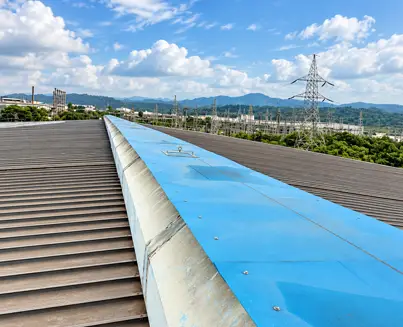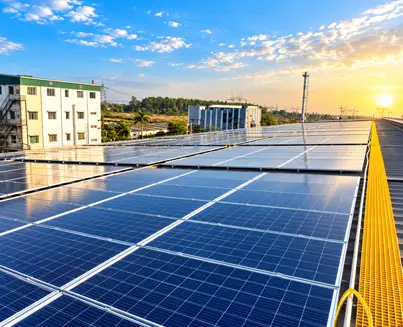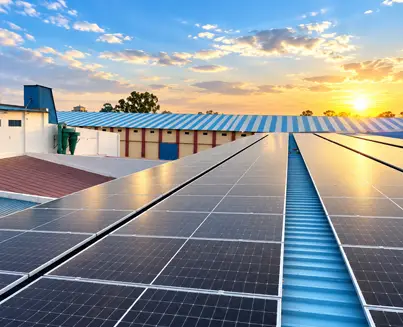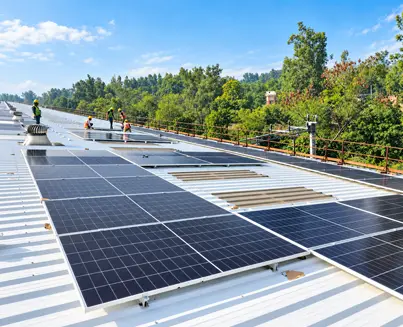
Somaya Solar Solutions Limited supports the installation, testing and commissioning of MW-scale and large ground-mounted solar power projects in India.
Utility-scale solar projects require a different execution approach from small rooftop installations. Project success depends not only on module installation, but also on site conditions, civil and structural interfaces, electrical integration, evacuation requirements, grid coordination, commissioning readiness and disciplined project execution.
Somaya's supplied project records demonstrate related MW-scale ground-mounted execution experience. Project classification, grid configuration and exact responsibilities should always be confirmed for each new utility-scale requirement.
What Is a Utility Scale Solar Power Plant?
A utility-scale solar power plant is a large, centralized solar generation facility designed to produce electricity at MW scale.
Unlike a rooftop system that primarily serves electricity demand at the same facility, a utility-scale project may interact with the grid through dedicated evacuation infrastructure, substations, feeders or other project-specific interconnection arrangements.
The exact commercial model can vary, but utility-scale execution normally requires coordination across multiple technical interfaces:
- Land and site readiness
- Plant layout
- Ground-mounted structures
- Civil works
- Dc and ac electrical systems
- Ht infrastructure where applicable
- Grid evacuation
- Metering and protection
- Testing
- Commissioning
- Project documentation
- Long-term operations planning.
The agreed EPC or installation contract determines which party is responsible for each element.
Utility-Scale Solar Is an Infrastructure Project
A large solar plant should not be evaluated only by module capacity.
Important project questions arise much earlier:
- Is the site physically suitable?
- Is the land accessible for construction?
- What are the soil and terrain conditions?
- How will power be evacuated?
- Is suitable grid capacity available?
- What voltage level is required?
- Is a feeder or transmission interface needed?
- Where will transformers and switchgear be located?
- What approvals or utility coordination are required?
- How will testing and commissioning be completed?
These factors can materially affect engineering, project schedule and commercial viability.
For this reason, utility-scale solar installation should be approached as coordinated infrastructure execution rather than simply a larger version of rooftop solar.
Utility-Scale, MW-Scale and Solar Park Project Execution
Utility-scale solar execution can include large centralized solar plants and solar-park projects where multiple civil, electrical, grid and commissioning interfaces must be coordinated across a larger project site.
For an MW-scale solar EPC or installation requirement, the execution scope can extend beyond module and structure installation to site development, electrical infrastructure, transformers and switchgear, evacuation interfaces, metering, protection, testing and commissioning where these activities form part of the contract.
A solar park may involve additional project stakeholders and infrastructure responsibilities. Somaya's exact role should therefore be defined from the tender, RFQ or technical scope rather than assuming that every solar-park development activity forms part of its installation or EPC responsibility.
Utility Scale Solar Power Plant Installation Scope
The exact scope must be defined project by project.
Based on Somaya's supplied execution evidence and wider service positioning, relevant project responsibilities may include the following where included in the agreed contract.
Equipment Supply
Supply of solar and electrical project components according to the approved technical scope.
Ground-Mounted Installation
Installation of mounting structures, modules and related plant equipment across the project site.
Electrical Installation
Execution of project electrical works included within the contracted scope.
The precise DC, AC, HT, transformer, switchgear, earthing and grid-interface responsibilities should be established in the technical proposal.
Testing & Commissioning
Testing and commissioning form a critical part of large-project handover.
Somaya's supplied ground-mounted project evidence includes testing and commissioning within the recorded scope of work.
Operations & Maintenance
Where contracted, post-commissioning O&M helps maintain plant availability and long-term operating performance.
One supplied ground-mounted project record includes five years of O&M within Somaya's scope.
For a large solar plant, the post-commissioning responsibility should be defined separately from the installation or EPC scope.
Where contracted, an O&M arrangement may address agreed inspection, maintenance, operating support, issue response and other plant-support responsibilities. The precise preventive-maintenance, monitoring and performance-related activities must follow the individual O&M agreement rather than a generic website assumption.
Somaya's supplied 1 MW KRIBHCO ground-mounted project record includes five years of O&M, providing verified evidence of post-commissioning responsibility on that specific project.
The O&M period, activities, exclusions, service levels and monitoring responsibilities for every new utility-scale requirement should be confirmed in the project contract.
Utility-Scale Solar Project Feasibility
Before large-scale execution begins, the project needs enough technical information to determine whether the proposed site, plant configuration and grid interface can support the intended development.
Depending on the project and contracted scope, feasibility inputs may include land availability and status, site access, topography, soil or geotechnical conditions, proposed capacity, preliminary layout, electrical infrastructure and the proposed grid-connection or evacuation route.
Grid feasibility can be particularly important. The nearest substation is not automatically the correct connection point simply because it is geographically close. Available capacity, connection voltage, network configuration, evacuation requirements and utility approval can affect the viable interconnection approach.
Any surveys, geotechnical investigations, evacuation studies or other feasibility activities performed or coordinated by Somaya should be defined in the individual project scope rather than assumed as universal inclusions.
Site Conditions That Affect a Utility-Scale Solar Project
Land and Access
Large projects need practical access for equipment, manpower, construction vehicles and material movement.
Difficult or remote access can influence construction planning and timelines.
Terrain and Ground Conditions
Uneven terrain, soil condition and site drainage can affect foundation design, structure execution and civil work.
Where project scope requires it, suitable engineering investigations should be completed before final execution decisions.
For larger ground-based projects, project-specific investigations may include topographical survey and geotechnical or soil assessment where required by the engineering scope. These inputs can influence site grading, drainage, foundation decisions, structure design and overall constructability.
The required investigation should be determined from actual site conditions and engineering requirements rather than treated as an identical checklist for every project.
Plant Layout
Array spacing, access roads, equipment locations and electrical routing influence both constructability and long-term maintenance.
Fixed-Tilt vs Single-Axis Tracker
The choice between a fixed-tilt structure and a tracking system is an engineering and commercial decision rather than a universal preference for every utility-scale project.
The appropriate configuration can depend on site geometry, terrain, layout, energy-yield objectives, structural requirements, equipment selection, maintenance considerations and project economics.
Where a tracker is being considered, its design, supply, installation and control responsibilities should be specifically established in the project scope. Somaya should not be represented as providing a particular tracker solution unless that capability is separately verified for the project.
Electrical Infrastructure
Large plants require carefully coordinated electrical installation.
The design may involve transformers, switchgear, HT cabling, protection systems, metering and other project-specific infrastructure.
Grid Evacuation
A plant can generate electricity only if the project has a viable route to transfer power.
Depending on the project, this can involve a feeder, pooling arrangement, substation connection or other evacuation infrastructure.
The required scope must be verified for the specific project and utility.
Grid Connection and Evacuation Are Critical Project Questions
Utility-scale solar research consistently shows that grid connection is one of the major differences between a large centralized solar project and a normal onsite installation.
Before execution, project stakeholders may need clarity on:
- Nearest suitable interconnection point
- Available grid capacity
- Required connection voltage
- Evacuation distance
- Metering arrangement
- Protection requirements
- Utility / discom responsibilities
- Substation interface
- Applicable approvals
- Commissioning and synchronization requirements.
Somaya should confirm its exact responsibility for these activities in each technical and commercial proposal.
An evacuation decision should therefore consider more than distance to the nearest substation. Project stakeholders may need to evaluate available capacity, connection voltage, route feasibility, required feeder or transmission infrastructure, protection and metering requirements, and the responsibilities of the relevant utility.
Where an evacuation study or detailed grid assessment is required, its exact engineering and coordination scope should be established for the individual project.
Grid or DISCOM coordination should never be assumed to be included unless it is explicitly part of the agreed scope.
Utility-Scale Project Documentation and Handover
Large solar projects can require coordinated technical and project documentation through execution, testing, commissioning and handover.
Depending on the contracted scope, the final documentation package may include applicable approved drawings, equipment records, testing and commissioning records, project-specific electrical or protection information and other agreed close-out documents.
The required documents should be established from the technical specification, tender or contract. Somaya should represent only those documentation and handover responsibilities that form part of its approved project scope.
MW-Scale Ground-Mounted Execution Experience
Somaya's supplied evidence includes MW-scale ground-mounted projects.
These examples are presented as related execution evidence. They should not automatically be interpreted as proof that every project meets a specific market definition of “utility scale.”
2.4 MW Ground-Mounted Project — Katni, Madhya Pradesh
Project: KUSUM-C, Ram Sati Devi
Capacity: 2.4 MW
Location: Katni, Madhya Pradesh
Project Type: Ground Mounted
Recorded Scope: Supply, Installation, Testing & Commissioning
The project record identifies a transmission-line-related challenge and notes liaison with the local DISCOM as the response.
Recorded Status: Up and running.
2.4 MW Ground-Mounted Project — Amroha, Uttar Pradesh
Project: KUSUM-A, Bhavnath Singh
Capacity: 2.4 MW
Location: Amroha, Uttar Pradesh
Project Type: Ground Mounted
Recorded Scope: Supply, Installation, Testing & Commissioning
Site access was recorded as a major execution challenge, with local support used to enable project work.
Publication Note: Current project status must be reconfirmed because the supplied record states Work in Progress.
1 MW Ground-Mounted Project — KRIBHCO, Hazira
Industry: Fertilizer
Capacity: 1 MW
Location: Hazira, Gujarat
Project Type: Ground Mounted
Recorded Scope: Supply, Installation, Testing & Commissioning with Five Years O&M
The project record identifies timeline management as a significant execution requirement.
Recorded Status: Up and running.
This project provides relevant evidence of ground-mounted installation, commissioning and O&M responsibility, although it is not being represented here as independently verified utility-scale classification.
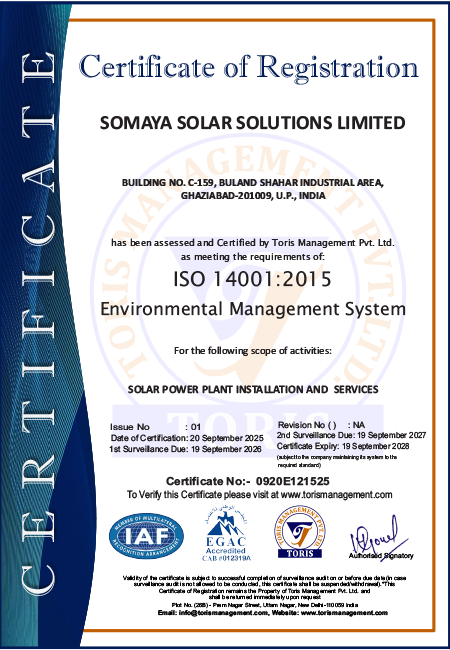
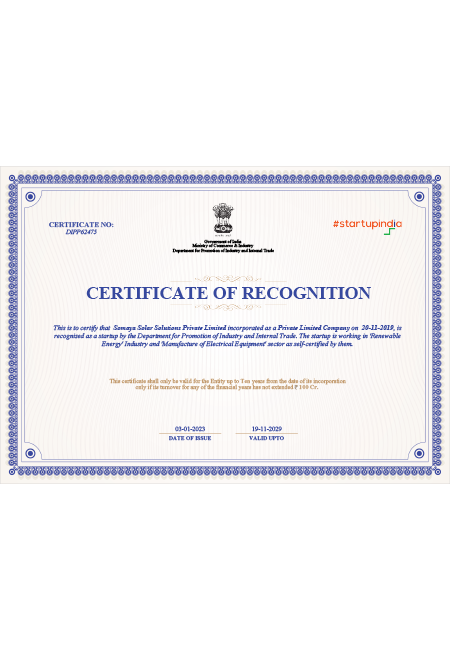
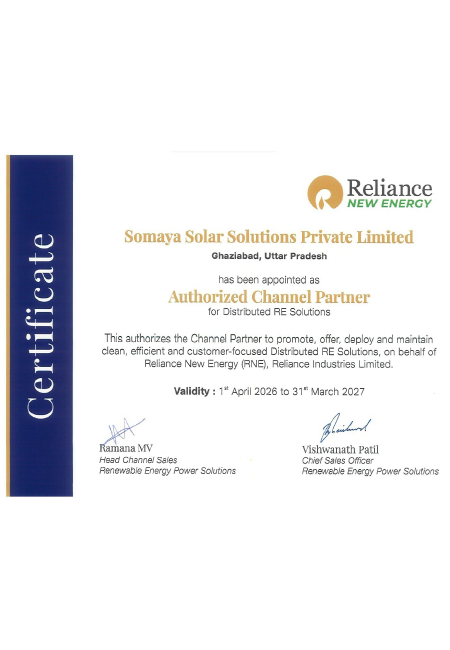
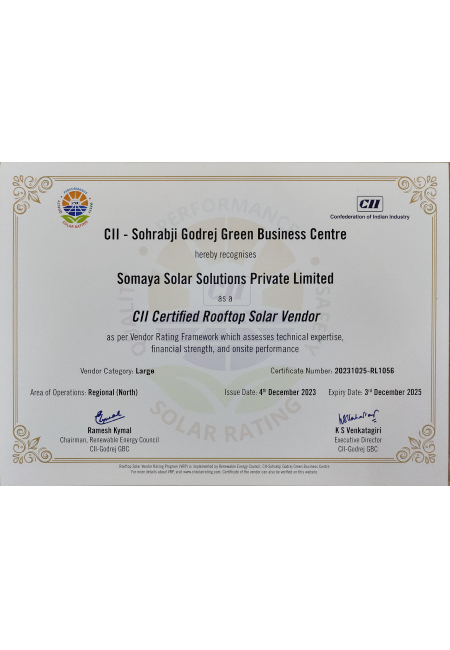
Review actual project capacities, locations, industries, photographs and available company certification or registration evidence rather than relying only on marketing statements.
View Somaya Certifications
View Somaya Projects
Utility-Scale vs Ground-Mounted Solar
These terms are related, but they are not identical.
Ground-mounted solar describes how and where the plant is physically installed.
Utility-scale solar describes a large centralized generation project and its broader infrastructure, grid and commercial context.
A ground-mounted project may support utility-scale execution experience, but ground-mounted construction alone does not establish that a project is a utility-scale generation asset.
This distinction is important when reviewing project portfolios and selecting a contractor.
Utility-Scale vs Commercial & Industrial Solar
Commercial and industrial projects are generally planned around the energy needs of a specific factory, warehouse, commercial facility or institution.
Utility-scale projects tend to involve broader infrastructure considerations such as:
- Larger centralized generation
- Substantial land requirements
- Dedicated ground-mounted arrays
- Grid evacuation
- Utility interconnection
- Substations or feeders
- Larger civil and electrical work packages
- Multi-party project coordination
Somaya's dedicated Commercial & Industrial Solar Installation page should remain the primary resource for factory and facility-based C&I installation intent.
What Should Buyers Evaluate Before Appointing a Utility-Scale Solar Installation Partner?
Relevant MW-Scale Experience
Ask for real project capacities, project type, site conditions and scope of work.
Do not evaluate experience only from a headline cumulative MW figure.
Scope Clarity
Confirm who is responsible for:
- Supply
- Civil work
- Structures
- Installation
- Electrical work
- Ht work
- Evacuation
- Substation interface
- Liaisoning
- Testing
- Commissioning
- O&m.
Ground and Site Capability
Utility-scale projects need practical construction planning for site access, terrain, structures, material movement and civil interfaces.
Electrical and Grid Coordination
Review experience with larger electrical systems, testing, metering and utility-interface requirements relevant to the proposed project.
Project Management
Large solar plants involve multiple work fronts.
Schedule control, materials, construction sequencing, manpower and interface management become increasingly important as project scale grows.
Commissioning Capability
Commissioning is more than switching the plant on.
The defined testing, protection, electrical checks, utility requirements and acceptance process should be agreed before execution.
Verifiable Evidence
Request project records, photographs, scope details, capacities and current project status.
Marketing descriptions should not substitute for evidence.
What Information Is Needed Before a Utility-Scale Project Discussion?
Useful initial information can include:
- Project location
- Proposed capacity
- Available land
- Current land status
- Site accessibility
- Proposed project model
- Nearest known substation or grid point, if available
- Expected connection voltage, if known
- Project stage
- Epc / installation scope required
- Civil scope
- Electrical scope
- Evacuation requirement
- Applicable tender / rfq
- Expected schedule
- Available survey or technical documents
Providing this information allows the project requirement to be evaluated more accurately.
Where the requirement comes through a tender or formal RFQ, the supplied technical and commercial documents should define the project requirements rather than a generic website scope.
Relevant inputs may include the technical specification, BOQ, drawings, project schedule, qualification requirements, electrical and evacuation scope, testing and commissioning requirements, documentation requirements and defined contractor responsibilities.
Somaya's participation in any specific tender should be represented only where the applicable eligibility, scope and business decision have been verified.
What Affects Utility-Scale Solar Project Cost?
There is no single reliable per-MW rate that applies to every project.
Important cost variables include:
- Project capacity
- Module selection
- Inverter architecture
- Mounting-system design
- Soil and terrain
- Foundation type
- Civil works
- Land-development requirements
- Access roads
- Dc and ac electrical infrastructure
- Transformers
- Switchgear
- Ht systems
- Substation requirements
- Evacuation distance
- Transmission or feeder scope
- Approvals
- Monitoring
- Commissioning
- O&m
Project-specific engineering and a defined bill of quantities are more useful than a generic brochure price.
What Determines a Utility-Scale Project Timeline?
The schedule depends on much more than installation manpower.
Major timeline variables can include:
- Land readiness
- Surveys and engineering
- Procurement lead times
- Site development
- Civil construction
- Structure installation
- Electrical installation
- Grid infrastructure
- Statutory requirements
- Utility coordination
- Testing
- Commissioning
This is why a timeline should be developed against the actual project scope rather than promised as a universal number.
Utility Scale Solar Installation Across India
Somaya Solar Solutions Limited operates from Ghaziabad, Delhi NCR, with strong regional relevance in Uttar Pradesh.
Utility-scale and MW-scale project opportunities can be evaluated across India according to project size, location, execution scope, site conditions and mobilisation requirements.
India-wide service capability should not be interpreted as an office or local team in every state.
Frequently Asked Questions
What capacity is considered utility-scale solar?
There is no single universal MW threshold that defines every utility-scale project.
Project configuration, centralized generation purpose, grid connection and infrastructure context are more useful indicators than capacity alone.
Is every ground-mounted solar plant a utility-scale project?
No.
Ground-mounted describes the physical installation configuration. Utility-scale refers to the larger generation, grid and infrastructure context.
Does a utility-scale project need a substation?
That depends on project capacity, connection voltage, utility requirements and the selected grid interconnection arrangement.
Some projects may require dedicated or shared substation infrastructure, while others may connect through a different approved configuration.
Why is grid evacuation important?
A technically complete solar array still needs a viable path to deliver generated power.
Available substation capacity, voltage, distance and network conditions can materially affect project feasibility and cost.
What is involved in solar plant commissioning?
Commissioning can include inspection, electrical testing, equipment verification, protection checks, metering, system integration and other activities required by the project and utility before operational handover.
The exact procedure depends on project configuration and agreed scope.
Does Somaya have MW-scale ground-mounted experience?
Yes. The supplied project records include 2.4 MW and 1 MW ground-mounted installations.
These are being used as related MW-scale ground-mounted execution evidence rather than automatically classified as utility-scale projects.
Does Somaya handle O&M?
The supplied 1 MW KRIBHCO ground-mounted project includes five years of O&M in the recorded scope.
O&M responsibility for a new project should be confirmed in its individual contract.
Can Somaya handle DISCOM coordination?
A supplied 2.4 MW ground-mounted project record notes local DISCOM liaison in relation to a transmission-line challenge.
The exact grid / DISCOM responsibility for any new project must be established in the project scope.
How much does a utility-scale solar project cost per MW?
There is no universal reliable per-MW price.
Land and site condition, project capacity, equipment specifications, civil work, grid evacuation, substation requirements, transmission distance, approvals and O&M can materially change project cost.
How long does a utility-scale solar plant take to install?
The timeline depends on engineering readiness, site condition, procurement, civil work, electrical infrastructure, grid requirements, approvals, testing and commissioning.
A project-specific schedule should be prepared after scope evaluation.
How much land is required per MW for a utility-scale solar project?
There is no single land-per-MW figure that should be applied to every utility-scale project. Module technology, plant layout, terrain, row spacing, mounting configuration, access roads, drainage, electrical infrastructure and other site requirements can change the usable land requirement.
A project-specific layout and site assessment provide a more reliable basis than a universal acreage assumption.