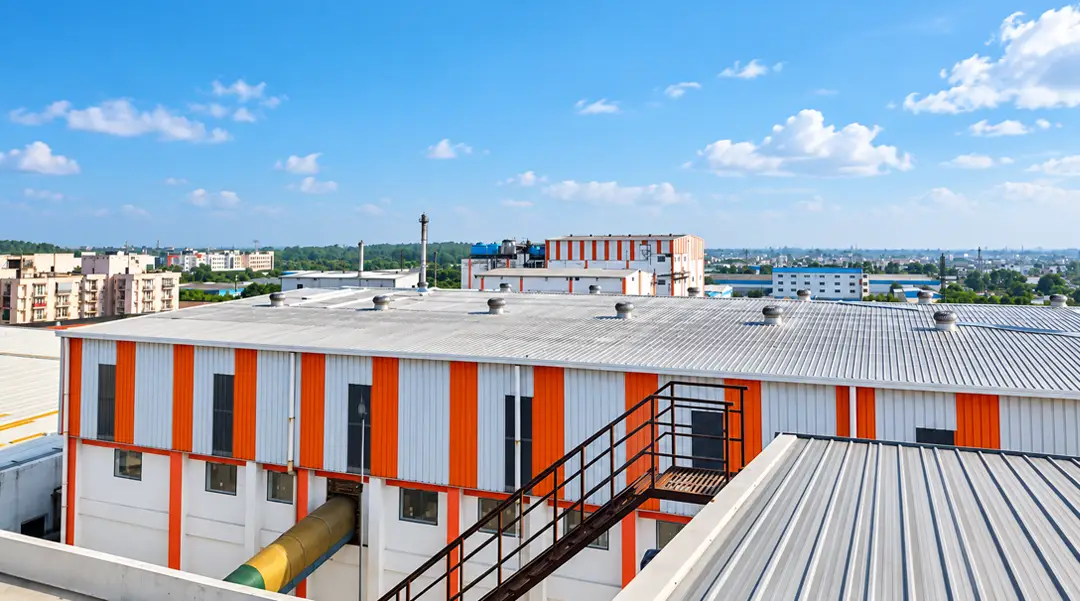
Somaya Solar Solutions Limited delivers commercial and industrial solar installations for factories, manufacturing units and business facilities across India, with strong operational relevance in Ghaziabad, Delhi NCR and Uttar Pradesh.
Our supplied project evidence includes 1 MW to 3 MW rooftop solar installations across paper, pharmaceutical, fertilizer and manufacturing facilities. Project responsibilities recorded for these installations include supply, installation, testing and commissioning, together with five-year O&M scope.
Commercial and industrial solar installation requires more than placing modules on an available roof. The plant has to work around the facility's structure, electrical system, operating environment, access conditions and day-to-day business operations.
Solar Installation Designed Around an Operating Facility
Commercial and industrial sites have different requirements from small residential rooftops.
A factory or large business facility may have:
- Large metal-sheet or RCC rooftops
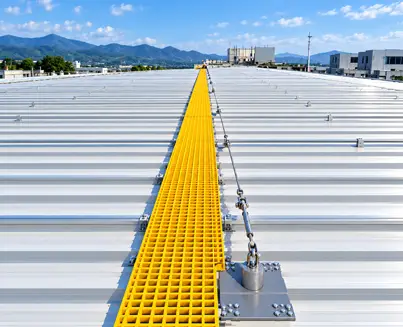
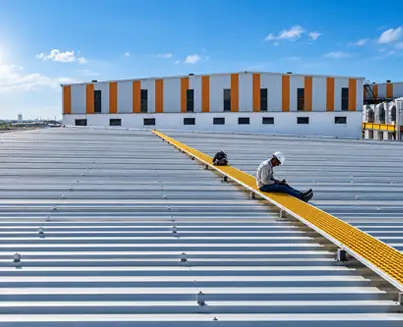
- High or difficult-to-access roofs
- Active production below the installation area
- Restricted material movement
- Structural and safety constraints
- Dust, fumes or corrosive operating conditions
- High daytime electrical consumption
- Existing HT/LT electrical infrastructure
- DISCOM and metering requirements
- Defined project-completion windows
These conditions should influence how the solar project is assessed, planned and executed.
For that reason, the installation approach should begin with the actual facility rather than with a generic system package.
Commercial and Industrial Rooftop Solar Installation
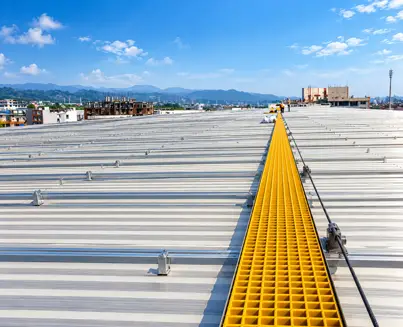
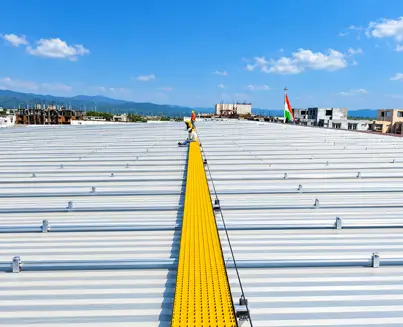
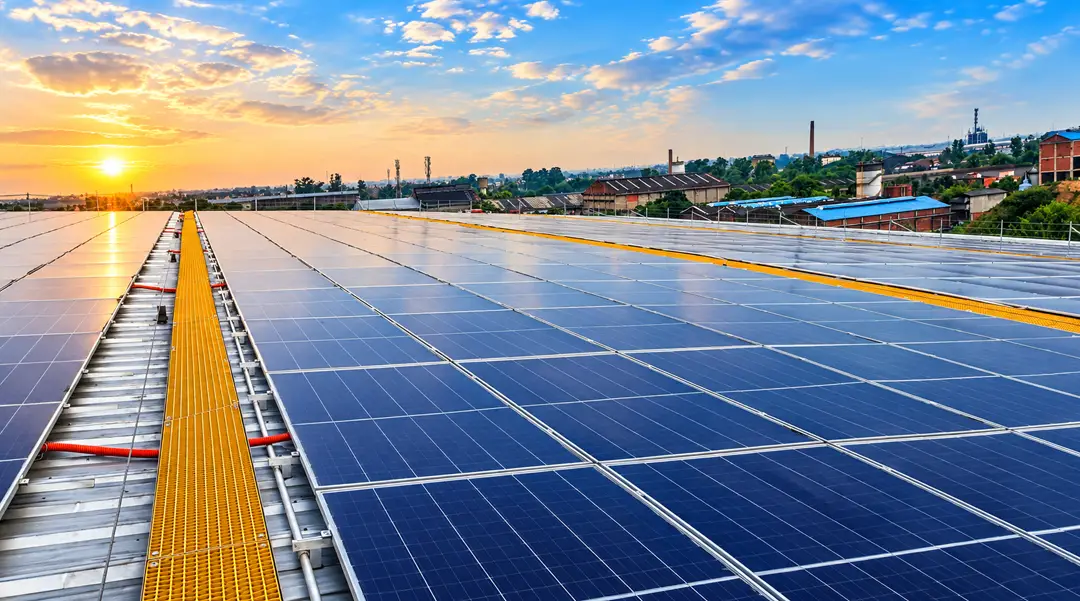
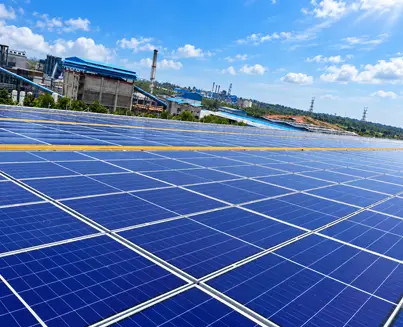
Rooftop solar is a major C&I installation format where factories, manufacturing plants, warehouses, commercial buildings and institutional facilities have suitable usable roof area.
Industrial rooftop solar installation has to account for more than available square metres. Roof construction, structural condition, loading, access, existing equipment, shadows, electrical integration and operating restrictions can affect the final system configuration and execution plan.
Commercial rooftop solar projects require the same site-specific approach. The appropriate capacity should be determined from usable installation area, electricity-consumption requirements, electrical infrastructure and the project's operating objectives rather than from roof size alone.
Somaya's supplied C&I evidence includes 1 MW to 3 MW rooftop installations across manufacturing, paper, pharmaceutical and fertilizer facilities.
Industrial Solar Installation for Factories and Manufacturing Plants
Industrial solar installation is particularly relevant where electricity consumption is significant during daytime operating hours.
Factories and manufacturing facilities may use available rooftop area to generate electricity close to the point of consumption while reducing part of their dependence on grid-supplied power.
The technical requirement, however, varies by facility.
A pharmaceutical plant with a high rooftop presents different execution conditions from a fertilizer facility exposed to corrosive fumes. A paper mill operating against a tight project schedule creates different project-management requirements from a manufacturing facility requiring net-metering coordination.
This is why industrial rooftop solar should be planned around site-specific operating conditions.
Commercial Solar Installation for Business Facilities
Commercial solar installations may be suitable for facilities such as:
- Commercial buildings
- Institutional facilities
- Warehouses and logistics facilities
- Offices
- Business campuses
- Malls and retail facilities
- Hospitals and healthcare facilities
- Educational institutions
- Other large daytime electricity users
Actual system feasibility and capacity should be determined from available installation area, electricity requirement, electrical infrastructure, roof condition and applicable grid requirements.
A commercial system should not be sized only from available roof area. The facility's electricity-consumption pattern and project objectives also need to be understood.
C&I Solar Applications Across Different Facility Types
Commercial and industrial solar requirements can vary substantially by facility and operating environment.
Somaya's supplied project evidence provides direct C&I rooftop experience across a paper mill, pharmaceutical facility, fertilizer facility and manufacturing plant. These projects demonstrate different execution considerations involving schedule, rooftop height and lifting, corrosive industrial conditions and net-metering coordination.
Other C&I applications can include warehouses, commercial buildings, hospitals, educational institutions and similar non-residential facilities where site and project feasibility support solar installation.
Mentioning an industry as a potential application should not be interpreted as a claim that Somaya has completed a project in every listed facility category.
What Should Be Assessed Before Installing Solar on a Commercial or Industrial Roof?
Roof Condition and Usable Area
The available rooftop area has to be evaluated for practical installation rather than theoretical module placement.
Existing equipment, access pathways, shadows, roof geometry and safe working areas can affect usable capacity.
Structural Conditions
Industrial roofs differ in construction, height, loading conditions and age.
Where structural verification is required, the solar layout and mounting approach should be developed around the roof's actual condition rather than assuming every large roof is automatically suitable.
For an industrial rooftop solar project, structural assessment may need to consider the existing roof system, condition, loading constraints and the additional loads associated with the proposed solar installation.
The required structural checks and the party responsible for carrying them out should be defined for the individual project. Somaya should not be represented as providing structural certification or a specific structural-engineering service unless that responsibility is included and verified for the project.
Electricity Requirement and Load Pattern
Two facilities with similar roof areas may require different solar capacities.
Electricity consumption, daytime operating hours, connected load and the intended level of solar contribution all influence system planning.
Electrical Integration
The solar system has to integrate correctly with the facility's existing electrical infrastructure.
The exact engineering and connection requirements depend on project capacity, electrical configuration and applicable grid conditions.
Load Profile and Solar System Sizing for C&I Facilities
A factory or commercial solar system should not be sized only from the maximum number of modules that can fit on the roof.
Useful planning inputs can include electricity consumption, daytime load pattern, operating hours, connected load, available installation area, electrical configuration and the intended contribution from solar.
A manufacturing plant with consistent daytime demand may present a different sizing requirement from a commercial facility with a different operating schedule or load profile.
The final capacity should therefore be based on project-specific technical and consumption information rather than a generic rooftop-capacity assumption.
Access and Operational Restrictions
Installation may need to be carried out while the facility remains operational.
Material movement, crane access, work zones, rooftop height, safety controls and operating schedules can materially affect project execution.
Can Solar Installation Be Planned Around an Operating Factory?
A solar project may be planned while a factory remains operational, but this should not be interpreted as a universal promise of zero production disruption.
Execution planning may need to coordinate material movement, crane operations, rooftop access, work zones, electrical interfaces, safety requirements and permitted working periods with the facility's production schedule.
Where shutdowns, electrical isolation or restricted work periods are technically required, these should be identified during project planning and coordinated with the facility before execution.
Grid and Metering Requirements
Where applicable to the agreed project scope, DISCOM coordination, net-metering or other grid-interconnection requirements must be factored into project planning.
Net-metering and grid-interconnection requirements for a commercial or industrial solar project can vary by location, project configuration, capacity and the applicable utility framework.
Project planning may therefore need to establish the metering arrangement, electrical interface, required documentation, applicable approvals and the responsibility of each party for DISCOM coordination.
Somaya's supplied 1 MW Luminous manufacturing-project evidence records net-metering coordination with the local DISCOM as a project requirement that was completed within the project timeline.
That project provides direct evidence of coordination experience, but the applicable process and Somaya's responsibility for every new C&I project should be confirmed separately.
Commercial & Industrial Solar Installation Scope
Based on supplied Somaya project evidence, relevant C&I execution scope can include:
Solar Equipment Supply
Supply of project equipment and required solar-system components according to the approved project scope.
Installation
On-site installation of the solar plant, including the activities required to physically integrate the system with the facility.
Electrical Integration
C&I solar installation may require integration with the facility's existing electrical infrastructure according to the approved project design and contracted scope.
The exact responsibilities can depend on system capacity, inverter configuration, LT/HT infrastructure, protection, metering and the required grid or facility connection arrangement.
Only electrical activities included in Somaya's approved technical and commercial scope should be represented as its project responsibility.
Testing & Commissioning
Testing and commissioning before the plant is handed over for operation.
Operations & Maintenance
The supplied evidence for Somaya's highlighted large C&I projects includes five years of O&M within the project scope.
Specific responsibilities for every new project should be confirmed in the technical and commercial proposal.
For an operating commercial or industrial facility, post-commissioning responsibilities should be clearly separated from the original installation scope.
Where contracted, C&I solar O&M may address agreed inspection, preventive-maintenance activities, issue response and other plant-support responsibilities. Monitoring or specific performance-management services should be claimed only where they are included in the applicable agreement.
The O&M period, activities, exclusions, response responsibilities and any monitoring requirements for a new project should be defined in its individual agreement.
Real C&I Project Challenges Handled by Somaya
Large commercial and industrial solar projects are often defined by site-specific execution problems. Somaya's supplied project records provide several useful examples.
Naini Papers Limited — 3 MW Rooftop Solar
Industry: Paper Mill
Location: Kashipur, Uttarakhand
Capacity: 3 MW
Project Type: Rooftop Solar
The project had to be completed within a two-month execution window.
Somaya's project record states that multiple installation and commissioning teams worked in parallel to manage the schedule.
The project was recorded as completed and working.
Akums Limited — 2.3 MW Rooftop Solar
Industry: Pharmaceutical
Location: SIDCUL, Haridwar, Uttarakhand
Capacity: 2.3 MW
Project Type: Rooftop Solar
A key challenge was the installation height, with the rooftop recorded at more than 70 feet.
The project record states that multiple cranes were used to manage material movement and execution at height.
Current commissioning status should be verified immediately before publication.
KRIBHCO — 2 MW Rooftop Solar
Industry: Fertilizer
Location: Shahjahanpur, Uttar Pradesh
Capacity: 2 MW
Project Type: Rooftop Solar
The fertilizer environment created a corrosion risk for project components.
According to the supplied project evidence, special coating was applied to structures to address the effect of fertilizer fumes.
The project was recorded as completed and running.
Luminous — 1 MW Rooftop Solar
Industry: Manufacturing
Location: Haridwar, Uttarakhand
Capacity: 1 MW
Project Type: Rooftop Solar
Net-metering coordination with the local DISCOM was identified as a major project requirement.
The supplied evidence records that this requirement was completed within the project timeline.
The project was recorded as operational and running.
Why C&I Solar Projects Need Facility-Specific Execution
The same nominal solar capacity does not create the same installation challenge at every site.
Important differences can include:
- Roof height
- Roof type
- Structural condition
- Industrial fumes or corrosive environment
- Operational production areas
- Access for cranes and lifting equipment
- Electrical configuration
- Grid-interconnection requirements
- Installation schedule
- Plant shutdown restrictions
- Safety requirements
- Long-term maintenance access
This is why relevant project experience matters when evaluating an industrial or commercial solar installation company.
A buyer should look beyond the number of modules or headline system capacity and assess whether the project team understands the operating conditions of the facility.
How to Evaluate a Commercial or Industrial Solar Installation Company
Check Relevant C&I Project Experience
Review projects that are comparable in capacity, industry or site complexity.
A company that has handled multi-MW industrial rooftops can provide more relevant evidence for a large factory requirement than a portfolio dominated by small residential systems.
Review the Actual Scope
Confirm who is responsible for equipment supply, installation, testing, commissioning, grid-related coordination and post-commissioning support.
Ask About Site-Specific Engineering
The proposed system should reflect the real roof, electrical infrastructure and operating environment.
Evaluate Execution Planning
For an operating factory, project planning may need to account for production activities, material movement, rooftop access and restricted work areas.
Review O&M Responsibility
Clarify how the solar plant will be maintained after commissioning and what services are included in the O&M arrangement.
Verify Project and Trust Evidence
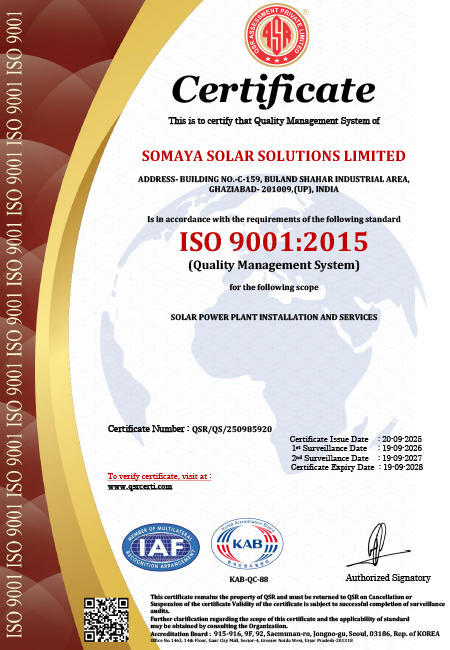
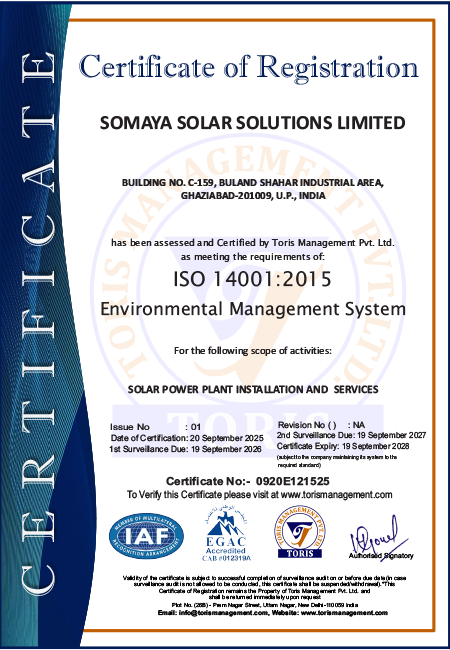
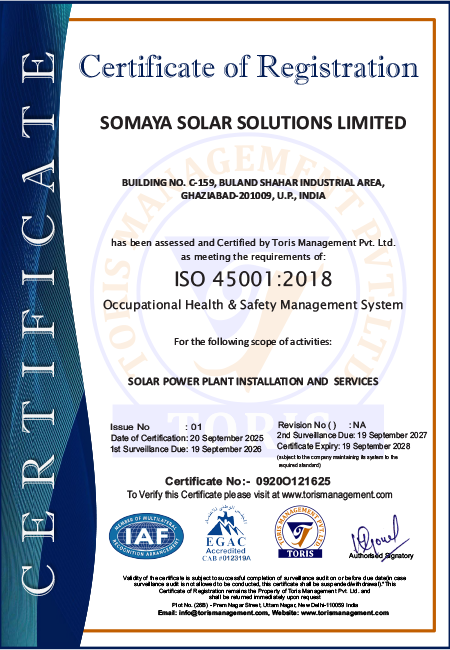
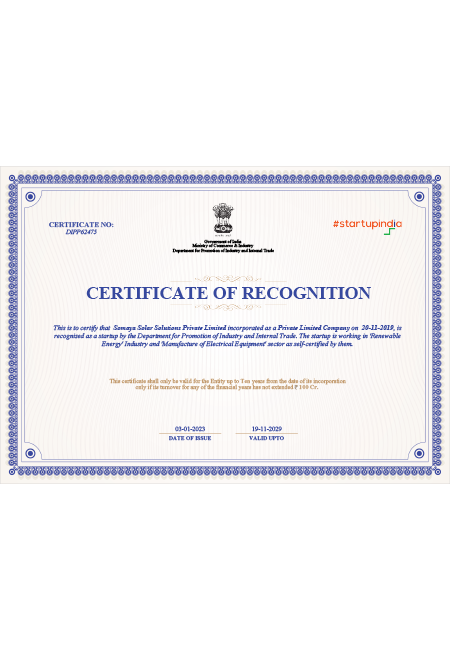
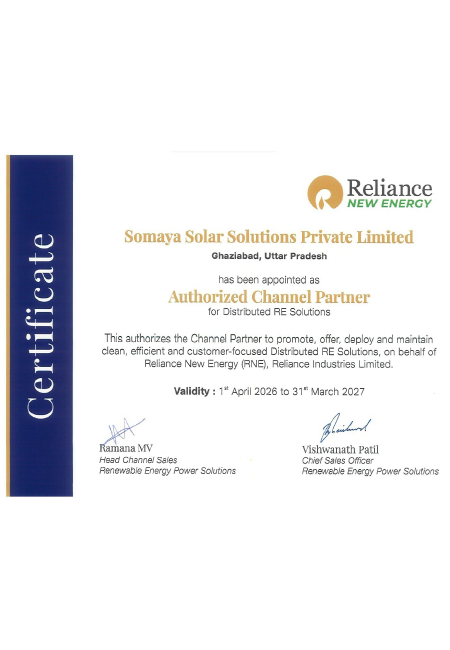
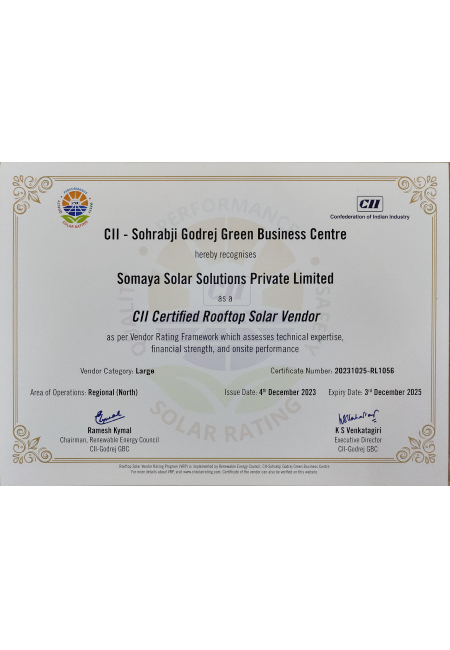
Review actual project capacities, locations, industries, photographs and available company certification or registration evidence rather than relying only on marketing statements.
View Our Projects
View Certifications
Commercial vs Industrial Solar Installation
Commercial and industrial projects share several solar-system principles, but the facility context can differ significantly.
Commercial facilities often focus on usable rooftop space, daytime business load, electricity-cost management and building-related installation constraints.
Industrial facilities may add production continuity, high roofs, heavy electrical loads, HT/LT integration, difficult access, industrial fumes, structural constraints and stricter site-safety requirements.
The correct design and installation approach therefore depends on the actual site rather than the label "commercial" or "industrial" alone.
From Project Requirement to Commissioning
A C&I project discussion should progressively establish:
1. Facility Requirement
Understand the site, business type, project objective and current electricity requirement.
2. Site and Roof Information
Review the proposed installation area, roof type, accessibility and relevant constraints.
3. Project Capacity and Technical Scope
Determine the proposed system scale and the activities included in the project.
4. Installation Planning
Plan material movement, workforce deployment, safety and execution around the operating facility.
5. Testing & Commissioning
Complete the required checks and commissioning activities before operational handover.
6. O&M Planning
Define the post-commissioning maintenance responsibilities required for the project.
The exact process and responsibilities should be confirmed for each project rather than assumed from a generic package.
What Affects Commercial and Industrial Solar Project Cost?
There is no single reliable price that applies to every commercial or industrial solar installation.
Project cost can vary according to capacity, module and inverter selection, roof type and condition, mounting requirements, structural considerations, electrical integration, access and lifting requirements, grid or metering scope, installation complexity, commissioning and O&M responsibility.
A high or difficult industrial rooftop, for example, may have different execution requirements from an easily accessible commercial building even at a similar capacity.
A meaningful commercial proposal should therefore be based on the actual facility, technical scope and project requirements rather than a generic per-kW figure.
What Determines Solar ROI or Payback for a C&I Facility?
Commercial and industrial solar economics depend on project-specific variables rather than a universal payback period.
Relevant factors can include project cost, electricity-consumption pattern, applicable electricity tariff, solar generation, system configuration, operating profile, financing structure where applicable, O&M cost and the commercial or regulatory arrangement used for the project.
Somaya should therefore not promise a fixed saving, ROI or payback period without evaluating the actual project inputs.
For buyers comparing proposals, the underlying assumptions are as important as the headline financial result.
Commercial & Industrial Solar Installation Across India
Somaya Solar Solutions Limited has its office and operational presence in Ghaziabad, Delhi NCR, with strong regional relevance in Uttar Pradesh.
The company evaluates commercial and industrial solar requirements across India according to project size, location, site conditions and execution requirements.
India-wide project capability should not be interpreted as an office or branch presence in every state.
What Information Is Needed for a C&I Solar Proposal or RFQ?
A useful commercial or industrial solar discussion starts with enough information to understand the facility, energy requirement and expected project scope.
Useful initial inputs can include:
- Facility location
- Industry or business type
- Electricity-consumption or load information
- Proposed capacity, if already defined
- Roof type and approximate usable area
- Relevant electrical information
- Project stage
- Required supply and installation scope
- Grid or net-metering requirement
- Target schedule
- O&m requirement
- Available drawings, photographs, technical specifications or rfq documents.
Where a formal RFQ already exists, its project-specific technical and commercial requirements should take precedence over generic website assumptions.
Frequently Asked Questions
What is commercial and industrial solar installation?
Commercial and industrial solar installation refers to solar PV systems installed for businesses, factories, manufacturing units, warehouses, institutions and other non-residential facilities.
The system is planned around the facility's electricity requirements, available installation area, electrical infrastructure and site conditions.
Is rooftop solar suitable for every factory?
Not automatically.
Roof type, structural condition, available area, height, existing rooftop equipment, shadow conditions and safe access should be assessed before deciding the final system configuration.
How is an industrial solar system sized?
System sizing should consider more than available roof space.
Electricity consumption, daytime load, available area, electrical infrastructure and the objective of the project all influence the appropriate capacity.
Can solar installation be carried out while a factory is operating?
It may be possible, but execution planning depends on the facility.
The project team may need to coordinate work zones, material lifting, rooftop access, production restrictions and safety requirements around existing operations.
What happens if an industrial roof is very high?
High rooftops can affect lifting, manpower movement, safety and installation logistics.
Somaya's supplied project evidence includes a 2.3 MW pharmaceutical rooftop project where the roof height was recorded at more than 70 feet and multiple cranes were used during execution.
Can industrial environments cause corrosion problems for solar structures?
Certain operating environments can expose components to corrosive conditions.
Somaya's 2 MW KRIBHCO rooftop project records fertilizer fumes as a corrosion challenge and notes the use of special coating on structures as the project response.
Does Somaya handle testing and commissioning?
Yes. The supplied project evidence for the highlighted C&I projects records Supply, Installation, Testing & Commissioning within Somaya's scope.
What should a company share before requesting a C&I solar proposal?
Useful initial information includes:
- Facility location
- Industry or business type
- Approximate electricity requirement
- Proposed project capacity, if known
- Rooftop type and approximate available area
- Current project stage
- Target schedule
- Relevant electrical details
- Available drawings or rfq documents
- Contact details for the project team
Does an industrial roof need structural assessment before solar installation?
The requirement depends on the existing roof, proposed solar system and project engineering needs. Roof construction, condition and loading constraints can affect the installation approach.
Where structural verification is required, the responsible party and required engineering scope should be established before the final solar layout and execution plan are approved.
How much does commercial or industrial rooftop solar cost in India?
There is no universal reliable price because project capacity, equipment, roof conditions, mounting requirements, electrical integration, access, grid scope, commissioning and O&M can vary between facilities.
A project-specific technical scope is required before a meaningful commercial estimate can be prepared.
What is the payback period for industrial solar in India?
There is no single payback period applicable to every industrial solar project. Project cost, electricity consumption, tariff, expected generation, financing structure where relevant, operating profile and O&M can all influence the financial outcome.
Payback should therefore be calculated from project-specific assumptions rather than a generic market claim.