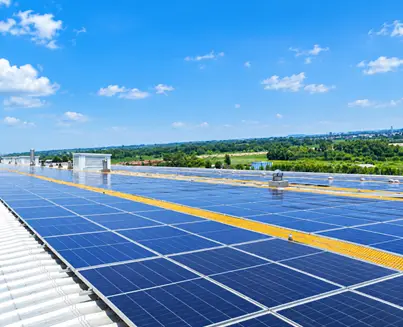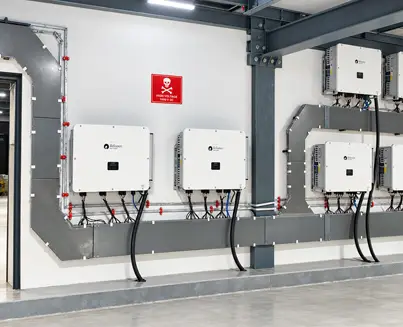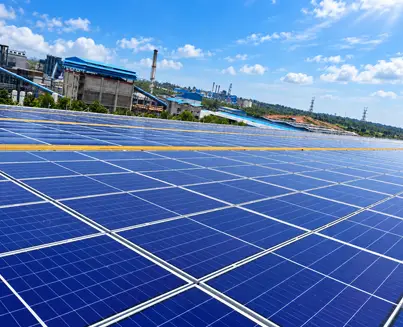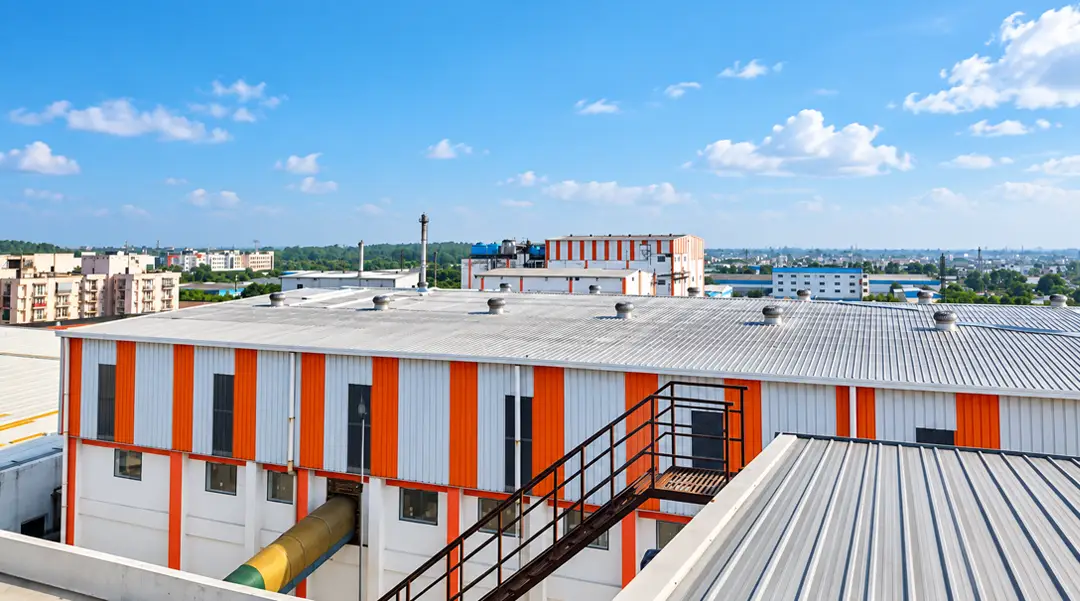
Somaya Solar Solutions Limited provides Solar EPC project execution for commercial, industrial and large solar installations across India, with a strong operational presence in Ghaziabad, Delhi NCR and Uttar Pradesh.
Our project experience includes multi-MW rooftop solar installations for manufacturing, pharmaceutical, paper and fertilizer-sector facilities. Depending on the agreed project scope, execution can include solar equipment supply, installation, testing, commissioning and long-term Operations & Maintenance support.
For organisations evaluating a Solar EPC company, the objective is not simply to install modules. A successful project requires coordinated engineering, procurement, construction, electrical integration, testing, commissioning and post-installation performance support.
What Does a Solar EPC Company Do?
EPC stands for Engineering, Procurement and Construction.
Under an EPC delivery model, the project is managed as an integrated solar infrastructure assignment rather than as disconnected equipment and installation contracts.
A typical Solar EPC project may involve:
- Site and project requirement assessment
- Solar plant planning and system engineering
- Equipment and Balance of System procurement
- Module mounting and structural works
- DC and AC electrical installation
- Solar module and inverter integration
- Testing and commissioning
- Grid and DISCOM-related coordination where included in project scope
- Performance monitoring
- Operations & Maintenance
The exact scope depends on the project configuration, site conditions, capacity, commercial terms and responsibilities agreed with the project owner.
Solar EPC Services for Large Commercial & Industrial Projects
Large solar projects require stronger execution controls than small residential installations.
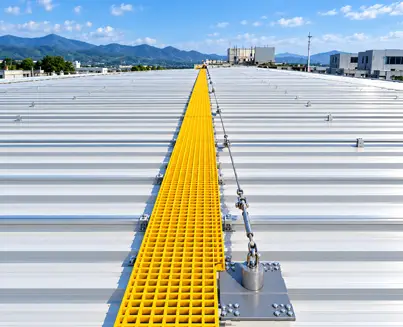
Industrial and commercial sites may involve high rooftops, production-area restrictions, structural limitations, corrosion risks, plant shutdown constraints, grid-connectivity requirements and tight commissioning schedules.
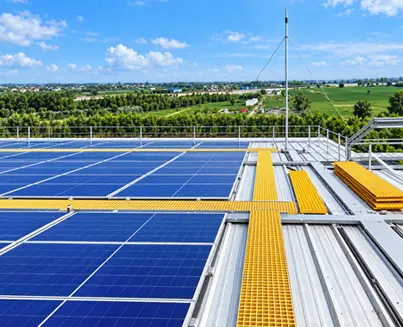
Somaya's project portfolio includes experience with multi-MW rooftop installations where such practical execution challenges had to be addressed during delivery.
The focus of this service is therefore on serious commercial, industrial and larger project requirements rather than small household rooftop installations.
Solar EPC Project Execution Scope
Engineering & Project Planning
Project planning begins with understanding the proposed plant capacity, available installation area, operating environment, electrical infrastructure and project-specific constraints.
Engineering decisions should account for factors such as plant layout, equipment placement, access, safety, structure requirements and electrical integration.
Engineering Deliverables in a Solar EPC Project
Engineering in a Solar EPC project is not limited to deciding plant capacity. It establishes the technical foundation for procurement, construction, electrical integration and commissioning.
Depending on the agreed project scope, engineering may include site evaluation inputs, preliminary plant layout, equipment selection criteria, electrical integration planning, mounting and structural coordination, cable routing philosophy, protection requirements and commissioning preparation.
The exact engineering deliverables should always be defined in the technical proposal or EPC contract rather than assumed as identical for every project.
Procurement & Solar Equipment Supply
Equipment selection and procurement directly affect plant reliability and long-term performance.
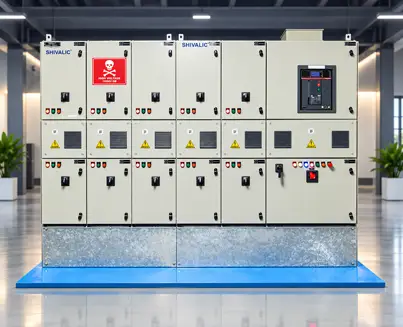
The EPC scope may include the supply and integration of solar modules, inverters, mounting structures, cables, electrical equipment and other Balance of System components required for the project.
The procurement scope should clearly identify which modules, inverters, mounting structures, cables, electrical equipment and Balance of System components form part of the contracted EPC responsibility.
For commercial and MW-scale projects, buyers should compare procurement scope together with equipment specifications, quantities and commercial inclusions instead of comparing only the overall project price.
Construction & Installation
Construction converts the approved project plan into an operating solar plant.
Execution may involve structure erection, module installation, DC cabling, AC works, inverter installation, electrical integration and associated site activities.
Solar EPC Project Management and Coordination
Large solar projects require coordination across engineering, procurement, logistics, construction, electrical integration, testing, commissioning and project handover.
Project management helps align these activities according to the approved project schedule and technical scope. Depending on the project, coordination may include equipment delivery sequencing, manpower planning, access management, electrical interfaces, safety planning, commissioning preparation and communication across multiple stakeholders.
Somaya's supplied multi-MW project evidence demonstrates execution challenges involving compressed schedules, rooftop logistics, corrosion environments and DISCOM coordination across different industrial facilities.
The exact project-management responsibility should follow the agreed EPC scope rather than a generic website assumption.
Testing & Commissioning
Testing and commissioning are essential before the plant is handed over for operation.
Somaya's project evidence includes supply, installation, testing and commissioning responsibility on multi-MW solar projects.
Grid Connection and DISCOM Coordination
Where the agreed project scope includes grid-interconnection activities, project execution may require coordination around metering, electrical integration, testing, documentation and utility-related requirements before commissioning.
The exact DISCOM, grid-synchronisation or utility-coordination responsibility depends on the project location, applicable utility framework and the contracted EPC scope.
Somaya's supplied Luminous manufacturing-project evidence records net-metering coordination with the local DISCOM as part of the project's execution process.
Operations & Maintenance
Long-term performance depends on what happens after commissioning.
Several large projects supplied by the client as evidence include five years of O&M as part of Somaya's project scope.
Multi-MW Solar EPC Project Experience
Real project evidence is an important factor when evaluating a Solar EPC contractor.
Naini Papers Limited – 3 MW Rooftop Solar Project
Industry: Paper Mill
Location: Kashipur, Uttarakhand
Project Type: Rooftop Solar
Scope: Supply, Installation, Testing & Commissioning with Five Years O&M
The project had a tight two-month completion requirement. Multiple installation and commissioning teams were deployed in parallel to manage the schedule.
Status: Completed and working.
Akums Limited – 2.3 MW Rooftop Solar Project
Industry: Pharmaceutical
Location: SIDCUL, Haridwar, Uttarakhand
Project Type: Rooftop Solar
Scope: Supply, Installation, Testing & Commissioning with Five Years O&M
A key execution challenge was working on a rooftop more than 70 feet high. Multiple cranes were used to support project execution and material movement.
Status: Work in progress, with commissioning planned for September 2026.
KRIBHCO – 2 MW Rooftop Solar Project
Industry: Fertilizer
Location: Shahjahanpur, Uttar Pradesh
Project Type: Rooftop Solar
Scope: Supply, Installation, Testing & Commissioning with Five Years O&M
The fertilizer environment created a corrosion-related challenge for project components. Special coating was used on structures to address the operating conditions.
Status: Completed and running.
Luminous – 1 MW Rooftop Solar Project
Industry: Manufacturing
Location: Haridwar, Uttarakhand
Project Type: Rooftop Solar
Scope: Supply, Installation, Testing & Commissioning with Five Years O&M
The project involved net-metering coordination with the local DISCOM as an important execution requirement.
Status: Operational and running.
What Should You Check Before Selecting a Solar EPC Company?
Selecting an EPC partner should involve more than comparing the lowest quotation.
For a commercial or multi-MW project, buyers should assess:
Relevant Project Experience
Check whether the EPC company has executed projects comparable to your proposed capacity, industry and site conditions.
Technical & Execution Capability
Evaluate whether the team can manage site-specific structural, electrical, safety and installation challenges.
Procurement & Component Responsibility
Understand which equipment and Balance of System components are included and who is responsible for sourcing and quality control.
Testing & Commissioning Scope
Confirm exactly what testing, electrical integration, grid synchronisation and commissioning documentation are included.
Project Management
For larger projects, execution planning and coordination can materially affect completion schedules.
O&M Responsibility
Clarify what happens after commissioning, including preventive maintenance, plant monitoring and long-term support.
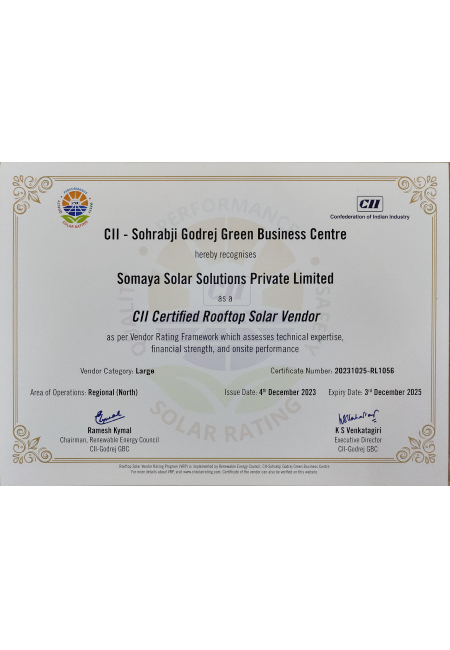
Certifications & Business Credentials
Review available business registrations, certifications, statutory registrations, technical authorisations and other project credentials that are relevant to commercial or industrial EPC execution.
Certification or authorisation claims should always be supported by verifiable company documents rather than marketing statements.
View Somaya Certifications
Actual Project Evidence
Ask for relevant projects, capacities, industries, locations, project photographs and execution details.
View Somaya Projects
Solar EPC for Different Project Requirements
A broad Solar EPC company may work across different solar-project configurations, but every requirement needs a specific technical and commercial approach.
Somaya's wider solar service structure includes:
- Commercial & Industrial Solar Installation
- Utility Scale Solar Power Plant Installation
- Turnkey Solar EPC Solutions
- Ground Mounted Solar Power Plants
- Solar IPP Development
- PM-KUSUM Solar Projects
These project categories should be evaluated according to their specific engineering, ownership, land, grid, regulatory and commercial requirements.
For a broad EPC-company requirement, this page serves as the primary starting point. More specialised requirements should move to the relevant dedicated service page.
Why Project Conditions Matter in Solar EPC
Two solar plants with the same MW capacity may require very different execution strategies.
Important site variables can include:
- Roof height and accessibility
- Available installation area
- Structural condition
- Industrial operating environment
- Corrosion exposure
- Electrical infrastructure
- Grid connectivity
- Material movement
- Plant-production restrictions
- Project schedule
- Safety controls
- O&M requirements
Somaya's documented projects demonstrate examples of high-rooftop execution, compressed timelines, corrosion-related structural treatment and DISCOM/net-metering coordination.
This project-specific approach is particularly important for commercial and industrial facilities where solar construction takes place around an operating business.
Solar EPC Presence Across India
Somaya Solar Solutions Limited is based in Ghaziabad, Delhi NCR, with strong project relevance in Uttar Pradesh and solar-project execution requirements extending across India.
India-wide service positioning refers to project capability and project evaluation. It does not imply offices or local branches in every state.
Project feasibility, execution scope and mobilisation are evaluated according to project size, location and requirements.
Frequently Asked Questions
What is a Solar EPC company?
A Solar EPC company manages Engineering, Procurement and Construction activities required to deliver a solar power project. Depending on the contract, its responsibility may extend from project planning and equipment sourcing through installation, testing, commissioning and O&M.
What is the difference between a Solar EPC company and a solar installer?
A solar installer may primarily handle physical installation. An EPC company normally carries broader responsibility involving engineering, procurement, construction and project coordination. The exact responsibilities must always be confirmed in the contract.
Does Somaya Solar work on MW-scale projects?
Yes. Project evidence supplied for this service includes rooftop projects of 3 MW, 2.3 MW, 2 MW and 1 MW across paper, pharmaceutical, fertilizer and manufacturing facilities.
Does Somaya provide O&M after commissioning?
The project evidence supplied for several large rooftop projects includes five years of Operations & Maintenance within the project scope. O&M requirements for a new project should be confirmed during commercial and technical discussions.
Can a Solar EPC company handle industrial rooftop projects?
Yes. Industrial rooftop EPC can involve plant-specific engineering and execution issues such as high rooftops, corrosion exposure, restricted access, electrical integration and commissioning around existing operations.
How long does a Solar EPC project take?
There is no single timeline for every EPC project. Project duration depends on capacity, site readiness, engineering, procurement lead times, approvals, grid requirements, weather and execution complexity.
A project schedule should therefore be developed after reviewing the actual site and scope rather than applying a generic timeline.
How much does a commercial or industrial Solar EPC project cost?
Solar EPC cost depends on plant capacity, project configuration, module and inverter selection, structure requirements, Balance of System specifications, site conditions, electrical work, approvals and O&M scope.
For serious commercial or MW-scale requirements, pricing should be based on a project-specific technical and commercial proposal.
What information should I share for an EPC discussion?
Useful initial information includes:
- Project location
- Industry / facility type
- Proposed capacity
- Rooftop or ground-mounted requirement
- Available area
- Existing electricity requirement
- Current project stage
- Expected EPC scope
- Target schedule
- Available drawings, RFQ or tender documents
Why do commercial and industrial projects choose a Solar EPC company instead of separate contractors?
An EPC approach can provide coordinated engineering, procurement, construction, testing and commissioning responsibility under one project structure instead of requiring the project owner to independently manage multiple contractors.
The exact responsibilities still depend on the EPC contract and agreed project scope.
How should I compare Solar EPC companies?
Compare relevant project experience, execution capabilities, engineering depth, procurement responsibility, component specifications, project-management capability, testing and commissioning scope, O&M support, certifications and actual project evidence.
The lowest initial quotation should not be the only selection criterion.