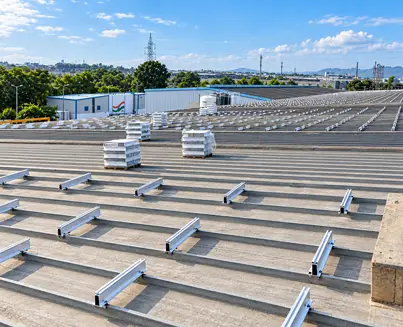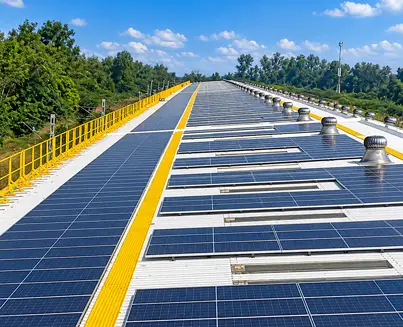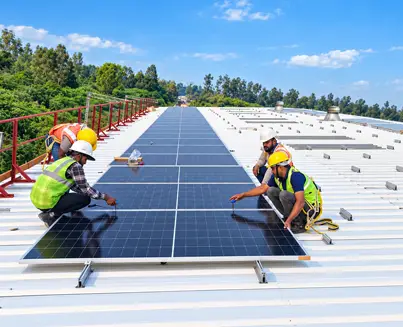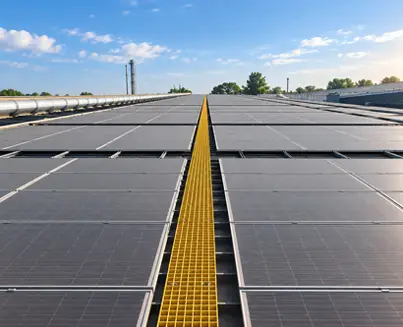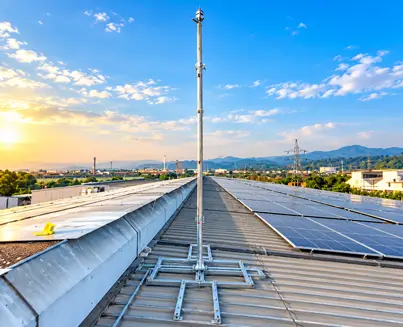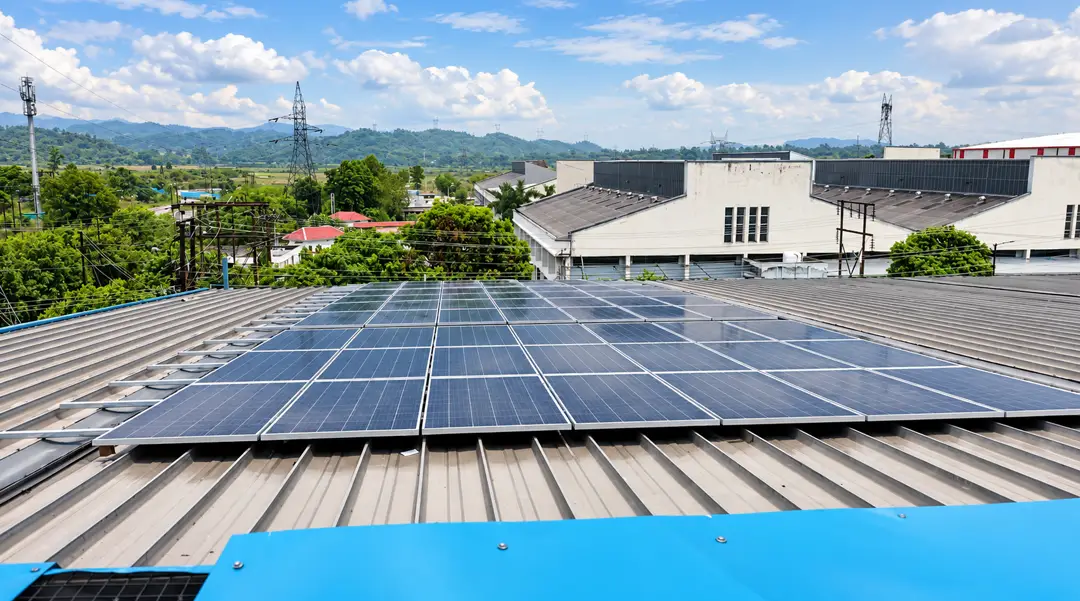
Somaya Solar Solutions Limited provides turnkey solar EPC solutions for commercial, industrial and larger solar project requirements across India.
A turnkey solar EPC approach brings the agreed project lifecycle under a coordinated responsibility structure. Instead of the client separately managing engineering interfaces, equipment procurement, contractors, installation teams, testing, commissioning and handover activities, the defined scope is coordinated through one EPC delivery model.
For buyers looking for an end-to-end solar EPC solution, the value of the turnkey model lies in clearer accountability across the contracted scope—not in assuming that every possible project activity is automatically included.
Somaya's supplied verified project evidence referenced on this page includes multi-MW rooftop projects across paper, fertilizer and manufacturing facilities, with recorded responsibilities covering supply, installation, testing and commissioning together with five-year O&M scope.
What Does Turnkey Solar EPC Mean?
Turnkey solar EPC is an Engineering, Procurement and Construction delivery model in which an agreed solar-project scope is coordinated through one primary EPC responsibility.
The objective is not simply to install solar panels.
A properly defined turnkey project brings together multiple activities such as:
- Project planning
- Engineering coordination
- Equipment and material procurement
- Installation and construction
- Electrical integration
- Testing
- Commissioning
- Applicable grid or DISCOM coordination
- Project documentation
- Handover
- Agreed post-commissioning support.
The exact responsibilities must always be defined in the project contract.
“Turnkey” should therefore describe a clear responsibility model—not an undefined promise that every possible project activity is automatically included.
Why Companies Choose a Turnkey Solar EPC Model
Large solar projects involve several technical and commercial interfaces.
Without clear responsibility, the client may have to separately coordinate:
- Designers
- Equipment suppliers
- Mounting-structure vendors
- Civil contractors
- Electrical contractors
- Installation teams
- Testing teams
- DISCOM or grid-related processes
- Commissioning activities
- Maintenance providers.
A turnkey EPC structure can simplify this interface by establishing a defined project owner for the contracted scope.
For project heads, engineering teams and procurement departments, this can make accountability easier to track throughout execution.
Single-Point Responsibility in Turnkey Solar EPC
Single-point responsibility means the buyer has a clearly identified EPC responsibility for the activities included in the agreed contract instead of managing multiple disconnected work packages independently.
This can simplify communication, interface management, schedule coordination and accountability when engineering, procurement, construction, electrical integration, testing and commissioning depend on one another.
It does not mean that every activity is necessarily performed directly by one internal team. Specialist vendors, contractors or external authorities may still be involved. What matters is that responsibilities, interfaces and exclusions are clearly defined and coordinated under the agreed project structure.
Single Contract Does Not Mean an Undefined Scope
A turnkey solar EPC project may bring the agreed EPC responsibilities under one primary contract instead of requiring the buyer to separately contract and coordinate multiple work packages.
The benefit is clearer commercial and execution accountability across the contracted scope. However, a single contract does not mean that every possible activity, approval, external interface or post-commissioning service is automatically included.
The contract should still define inclusions, exclusions, client responsibilities, third-party interfaces and the point at which the EPC responsibility ends.
One Project Scope, Clear Responsibility
The most important part of a turnkey solar project is scope clarity.
Before work begins, the EPC proposal should identify:
- what is included
- what is excluded
- who supplies each major component
- who performs civil and electrical activities
- what testing is required
- who handles applicable approval or liaison activities
- what defines commissioning
- what documentation is provided at handover
- what O&M responsibility follows commissioning.
This protects both the buyer and the EPC contractor from assumptions during execution.
A turnkey contract should reduce interface ambiguity—not create it.
What Should a Turnkey EPC Responsibility Matrix Clarify?
For a larger solar project, the responsibility matrix should make it clear who is responsible for each material project interface.
Depending on the project, this may include engineering inputs, equipment procurement, structural and civil activities, electrical works, logistics, installation, testing, grid or DISCOM liaison, commissioning, documentation, handover and post-commissioning support.
It should also identify client responsibilities, third-party responsibilities and activities that are specifically excluded from the EPC contract.
This is particularly important when comparing turnkey solar EPC proposals because two contractors can use the same “turnkey” label while offering materially different scopes.
Turnkey Solar EPC Project Scope
Project scope varies according to site type, capacity, location and commercial requirement.
Where included within Somaya's agreed contract, the delivery structure may include the following stages.
From Project Requirement to Commissioning and Handover
A turnkey solar EPC lifecycle can connect the project from initial requirement and feasibility review through engineering, procurement, construction or installation, testing, commissioning and final handover.
This is often described as concept-to-commissioning or end-to-end solar EPC delivery. The exact starting point and final responsibility depend on the individual contract, because some projects may already have completed studies, designs, approvals or procurement before the EPC contractor is appointed.
Project Requirement & Initial Assessment
The process starts by understanding:
- project location
- site type
- industry
- proposed capacity
- electricity requirement
- available roof or land
- current project stage
- expected timeline
- available technical documents.
This information establishes the basis for further technical and commercial discussion.
Feasibility and Site Assessment
Before a turnkey scope is finalized, the available project information and site conditions should be reviewed to identify the technical inputs, constraints and responsibilities that can affect execution.
Depending on the project, this may involve review of available roof or land, access, structural or site conditions, electrical requirements, proposed capacity, existing drawings, grid-related information and other project-specific constraints.
The exact feasibility studies, surveys and engineering investigations performed or coordinated by Somaya should be defined in the proposal rather than assumed as a standard inclusion in every turnkey contract.
Engineering & Project Planning
Engineering converts the project requirement into an executable technical plan.
Depending on the agreed scope, this may include review of:
- site conditions
- layout
- structural conditions
- electrical configuration
- equipment requirements
- cable routing
- project interfaces
- commissioning requirements.
Only engineering activities actually included in Somaya's proposal should be represented as contracted deliverables.
Where included in the engineering and commercial scope, the approved technical design can also support development or finalisation of the project BOQ or BOM used to define required equipment, materials and quantities.
For the buyer, this creates an important link between engineering and procurement. The commercial proposal should make clear which quantities, specifications and supply responsibilities form part of the contracted turnkey scope.
Procurement & Equipment Coordination
A turnkey project also requires coordinated procurement of the equipment and materials included in the approved project scope.
Typical categories can include:
- PV modules
- inverters
- mounting structures
- DC and AC cabling
- switchgear
- electrical protection equipment
- balance-of-system components.
The final equipment specification, brands and quantities should follow the approved project proposal rather than a generic website list.
Construction & Installation
Construction and installation convert the approved design and supply package into the physical solar plant.
This stage may involve multiple work fronts and requires coordination of:
- material movement
- manpower
- installation sequence
- safety
- roof or site access
- electrical works
- project schedule
- operating-site restrictions.
Civil and Electrical Works in a Turnkey Scope
Civil and electrical responsibilities can vary significantly between solar projects. Where included in the approved turnkey contract, execution may require project-specific civil interfaces, mounting or structural works, cable routing, electrical installation, protection systems and integration with the facility or relevant electrical network.
These activities should not be treated as universal inclusions simply because a project is described as turnkey. The proposal and responsibility matrix should define the exact civil, structural and electrical package.
Testing & Commissioning
Testing and commissioning establish whether the installed system is ready for operational handover according to the agreed scope.
Somaya's supplied project evidence specifically records testing and commissioning responsibilities across its highlighted large rooftop projects.
Project Handover and Documentation
A turnkey project does not end merely because physical installation is complete. The agreed close-out process should establish what testing, commissioning, acceptance and documentation are required before the project is handed over.
Depending on the contracted scope, handover documentation may include applicable project records, approved technical documents, equipment information, testing or commissioning records and other agreed close-out documents.
The exact documentation package should be specified project by project. Somaya should represent only the records and handover responsibilities included in the approved contract.
Approvals and External Responsibilities in a Turnkey Project
The word “turnkey” should not be interpreted as automatic responsibility for every statutory approval, utility process or third-party requirement.
Where approvals, submissions, liaison or compliance-related coordination are required, the EPC proposal should identify which activities are included in Somaya's scope, which remain with the client and which depend on external authorities.
This distinction is particularly important for grid, DISCOM, metering and other project-specific approval interfaces that may affect commissioning but are not controlled entirely by the EPC contractor.
Grid and DISCOM Coordination in Turnkey Solar EPC
Where a project requires grid, metering or DISCOM interaction, these external interfaces can affect both project planning and commissioning.
The required responsibility can vary by project and may involve coordination around applicable connection requirements, metering, documentation, testing or other utility processes.
Somaya's supplied 1 MW Luminous project record identifies net-metering / DISCOM coordination as a project challenge and records completion within the project timeline.
This evidence should not be interpreted as a universal promise that Somaya assumes every statutory, approval or DISCOM responsibility. The exact liaison and approval scope should be defined in the individual contract.
O&M Support
Somaya's supplied evidence for the highlighted 1 MW to 3 MW rooftop projects includes five years of O&M within the recorded scope.
The exact O&M arrangement for every new project should be confirmed in the project contract.
Turnkey EPC and long-term O&M should not automatically be treated as the same contractual responsibility.
Where O&M forms part of the project, the agreement should separately define the service period, activities, responsibilities, exclusions and applicable service levels after commissioning.
Somaya's supplied evidence for the verified 1 MW to 3 MW projects referenced on this page records five years of O&M, providing first-party evidence of post-commissioning responsibility on those specific projects.
Turnkey Solar Project Management and Coordination
Turnkey solar project management is the coordination layer that connects engineering, procurement, logistics, construction, installation, testing, commissioning and handover across the agreed project scope.
For larger projects, delays or interface problems in one workstream can affect several others. Project management therefore needs to consider dependencies such as equipment availability, site readiness, manpower, access, installation sequencing, electrical interfaces, external coordination and commissioning requirements.
The objective is not simply to supervise individual activities. It is to keep the contracted work packages aligned with the approved project requirements, responsibilities and execution sequence.
Somaya's supplied 3 MW Naini Papers project provides a relevant coordination example. The recorded execution challenge was completing the project within two months, and the supplied evidence states that multiple installation and commissioning teams worked in parallel.
Turnkey Solar EPC Project Evidence from Somaya
3 MW Rooftop Solar Project — Naini Papers Limited
Industry: Paper Mill
Location: Kashipur, Uttarakhand
Capacity: 3 MW
Recorded Scope: Supply, Installation, Testing & Commissioning with Five Years O&M
The supplied project record identifies a two-month completion requirement as an execution challenge. Multiple installation and commissioning teams were deployed in parallel.
For the turnkey service, this project provides evidence of schedule coordination, multi-team execution and continuity from installation through commissioning and O&M.
2 MW Rooftop Solar Project — KRIBHCO, Shahjahanpur
Industry: Fertilizer
Location: Shahjahanpur, Uttar Pradesh
Capacity: 2 MW
Recorded Scope: Supply, Installation, Testing & Commissioning with Five Years O&M
The supplied record identifies fertilizer-fume corrosion risk as a site-specific challenge. The recorded response was the use of special coating on structures.
This project provides a useful turnkey example because coordinated project execution must respond to actual site conditions rather than treating every industrial facility as technically identical.
1 MW Rooftop Solar Project — Luminous, Haridwar
Industry: Manufacturing
Location: Haridwar, Uttarakhand
Capacity: 1 MW
Recorded Scope: Supply, Installation, Testing & Commissioning with Five Years O&M
The supplied project record identifies net-metering / DISCOM coordination as an execution challenge and records the project as operational and running.
For turnkey buyers, the project demonstrates how external coordination can form part of the wider delivery process where included in the project responsibility.
Review actual project capacities, locations, industries, photographs and available company certification or registration evidence rather than relying only on marketing statements.
View Somaya Certifications
View Somaya Projects
Turnkey Solar EPC for Commercial and Industrial Projects
A turnkey delivery model can be used for commercial and industrial solar projects, including factory and manufacturing-plant requirements, where the buyer wants coordinated responsibility across the agreed EPC lifecycle.
Somaya's supplied project evidence includes rooftop solar execution for paper, fertilizer and manufacturing facilities, with project capacities from 1 MW to 3 MW in the verified examples referenced on this page.
The technical requirements can vary materially between facilities. Access, operating conditions, structural interfaces, corrosion exposure, electrical integration, logistics and external coordination may all affect execution.
Facility-specific solar installation requirements are addressed separately under Somaya's Commercial & Industrial Solar Installation service. This page focuses on how the agreed project responsibilities are coordinated under a turnkey EPC delivery model.
Turnkey Solar EPC vs Solar Installation
A solar installer may be contracted primarily for physical installation or a defined execution package. A turnkey EPC arrangement has a broader responsibility model when the contract includes coordinated engineering, procurement, construction or installation, testing, commissioning and handover activities.
The difference therefore lies in the contracted responsibility—not simply in the company label.
Buyers should compare the actual scope, exclusions and responsibility matrix rather than assuming that “installer,” “EPC contractor” and “turnkey EPC provider” always describe identical services.
Turnkey Solar EPC vs a Solar EPC Company
“Solar EPC company” commonly describes the type of company or contractor providing engineering, procurement and construction services. “Turnkey solar EPC” describes the project-delivery and responsibility model under which an agreed scope is coordinated toward commissioning and handover.
A solar EPC company may provide turnkey delivery, but the terms should not automatically be treated as identical.
For buyers comparing the two, broad EPC-company selection focuses on the provider's overall engineering, procurement and construction capability. Turnkey EPC evaluation should go further by examining how the agreed project lifecycle, interfaces and responsibilities are coordinated under a single delivery structure.
What Affects Turnkey Solar EPC Project Cost?
There is no single reliable turnkey solar EPC price per kW or per MW that applies to every large project.
Commercial value depends on what the quoted turnkey scope actually includes. Important variables can include project capacity, site or roof conditions, engineering requirements, equipment specifications, mounting or structural work, civil and electrical scope, logistics, grid-related requirements, testing, commissioning, documentation and O&M.
A lower headline price may not represent a lower total project cost if important work packages are excluded.
For meaningful comparison, buyers should evaluate the commercial proposal together with the technical scope, BOQ or applicable equipment schedule, exclusions and responsibility matrix.
What Affects a Turnkey Solar EPC Project Timeline?
A turnkey solar EPC project does not have one universal completion period.
The schedule can depend on project capacity, site readiness, engineering inputs, approvals or external interfaces where applicable, equipment procurement, logistics, structural or civil work, installation sequencing, electrical integration, testing and commissioning.
Operating facilities can introduce additional access or work-window constraints.
Somaya's supplied Naini Papers evidence demonstrates one project-specific response to schedule pressure: multiple installation and commissioning teams were used in parallel for the recorded 3 MW project.
A credible project timeline should therefore be developed from the actual scope and execution conditions rather than a generic website promise.
How to Compare Turnkey Solar EPC Companies or Contractors
Do not shortlist a turnkey solar EPC company only on the lowest headline price or the use of the word “turnkey.” Compare providers on the actual responsibility they are prepared to contractually define.
Relevant Project Evidence — Review actual project capacities, industries, locations, recorded scope and current project status.
Scope Clarity — Confirm exactly what is included and excluded across engineering, procurement, construction, installation, testing, commissioning and handover.
Responsibility Matrix — Identify client, EPC contractor, specialist-vendor and external-authority responsibilities.
Equipment and BOQ Clarity — Compare equipment specifications, quantities and commercial assumptions rather than only total price.
Project Management — Understand how engineering, procurement, logistics, site execution and commissioning interfaces will be coordinated.
Site-Specific Experience — Look for evidence that the contractor has dealt with real execution constraints rather than relying only on generic capability claims.
Grid / DISCOM Responsibility — Where relevant, establish the exact liaison, metering, approval and connection responsibilities.
Handover and Documentation — Confirm what records and documents are included at project close-out.
O&M — Check whether post-commissioning support is included, optional or contracted separately.
These criteria also provide a more useful way to evaluate searches for a reliable, experienced, top or best turnkey solar EPC company than relying on unsupported marketing labels.
What Information Is Needed for a Turnkey Solar EPC Proposal or RFQ?
A useful turnkey EPC proposal starts with enough information to define the project and its expected responsibility model.
• Project location
• Facility / site type
• Industry
• Available roof or land
• Proposed capacity
• Electricity requirement
• Existing electrical information
• Available drawings or technical records
• Current project stage
• Required EPC scope
• Known grid / DISCOM requirement
• Expected timeline
• Required testing and commissioning scope
• Handover expectations
• O&M requirement
• Tender or RFQ documents, where applicable
Where a formal RFQ or tender document exists, its technical, commercial and contractual requirements should take precedence over generic assumptions.
Providing this information allows the EPC discussion to focus on the actual project scope rather than a generic turnkey package.
Frequently Asked Questions
What is included in turnkey solar EPC?
A turnkey solar EPC contract can combine engineering, procurement, construction or installation, testing, commissioning, documentation and handover under a coordinated responsibility structure. Exact inclusions vary by project and must be defined in the contract.
What is excluded from a turnkey solar EPC contract?
There is no universal exclusion list. Land, statutory activities, civil works, grid infrastructure, approvals, O&M or other responsibilities may be included or excluded depending on the agreed scope. The proposal should identify exclusions explicitly.
Does turnkey mean one company performs every activity itself?
Not necessarily. Specialist vendors, subcontractors or external authorities may participate. The important point is that responsibility for coordinating the contracted scope and interfaces is clearly defined.
Is O&M included in turnkey solar EPC?
It depends on the contract. Somaya's verified project evidence referenced on this page includes five-year O&M on the highlighted projects, but the O&M period and service scope for a new project should be agreed separately.
How much does turnkey solar EPC cost per MW?
There is no reliable universal per-MW figure. Equipment, project capacity, site conditions, structural and civil requirements, electrical scope, logistics, grid interfaces, commissioning and O&M can materially affect project cost.
How long does a turnkey solar EPC project take?
The timeline depends on project size, site readiness, engineering, procurement, logistics, construction or installation, electrical work, external interfaces and commissioning requirements. A project-specific schedule is more useful than a universal duration.
How should a buyer compare turnkey solar EPC proposals?
Compare the technical scope, exclusions, responsibility matrix, equipment and BOQ assumptions, project-management approach, testing and commissioning responsibilities, handover requirements, O&M and relevant project evidence—not only the total quoted price.