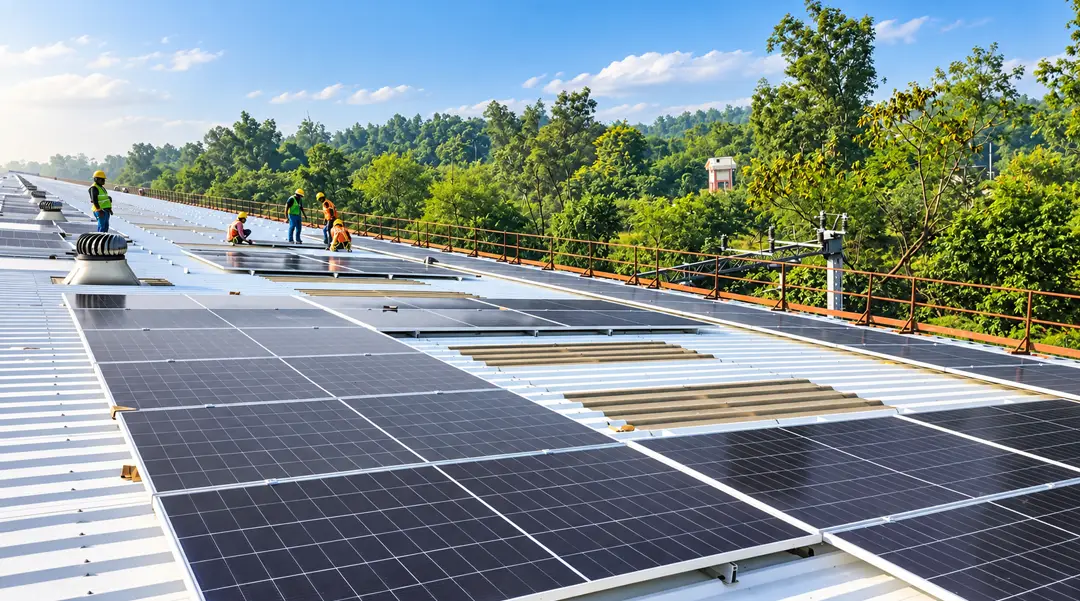
Somaya Solar Solutions Limited supports Modinagar-based project developers, industrial organisations and infrastructure businesses evaluating utility-scale solar power plant installation requirements. Its documented MW-scale ground-mounted project experience includes equipment supply, installation, testing and commissioning for projects in Madhya Pradesh, Uttar Pradesh and Gujarat.
Utility-scale solar projects require coordinated planning across site readiness, solar mounting structures, equipment procurement, civil and electrical interfaces, grid connectivity, construction activities and commissioning. For Modinagar-based organisations developing projects within or outside the National Capital Territory, Somaya evaluates the required installation and execution package against the proposed site, project capacity and defined contractual scope.
Planning an MW-Scale Solar Project?
Share your project location, proposed capacity, current development stage and installation requirements with Somaya Solar.
Request a Project Scope Review
Utility Scale Solar Projects for Modinagar Based Organisations
Modinagar-based organisations evaluating large solar generation projects need to distinguish between the location of the electricity consumer, the generating facility and the contractual model under which electricity will be supplied.
The Modinagar Solar Energy Policy identifies a target of accessing 3,750 MW of utility-scale solar capacity from outside Modinagar, alongside a separate target of 750 MW of rooftop solar installations within the state. These are policy targets rather than confirmed installed capacity.
This distinction has practical implications for project planning. A utility-scale power plant intended to support a Modinagar-based buyer may be developed in a different state, subject to suitable land, applicable electricity regulations and an appropriate commercial arrangement.
Utility Scale Solar Plants Outside Modinagar
For Modinagar-based organisations, utility-scale solar generation facilities may be developed in another state where suitable land and grid infrastructure are available.
Such projects must follow the land-use, electrical, grid-connection and regulatory requirements applicable at the generating location. The electricity-supply arrangement for the Modinagar-based buyer requires separate commercial and regulatory evaluation.
Utility Scale Solar Development Within Modinagar
Large ground-based solar development within Modinagar faces practical constraints associated with available land, site permissions and infrastructure.
A proposed site must be evaluated for permitted use, sufficient developable area, construction accessibility, electrical connection requirements and project viability.
The presence of vacant land does not automatically establish that a utility-scale plant can be developed.
Utility Scale Solar EPC Requirements for Project Developers
Project developers may approach an EPC or installation contractor after identifying land, securing certain approvals or completing preliminary engineering.
Others may still be assessing site conditions, grid availability and the proposed project configuration.
The technical and commercial proposal should reflect the actual development stage, with clear responsibility assigned for any remaining studies, construction packages or utility-related activities.
Site Feasibility and Project Readiness for MW-Scale Solar Installations
Before committing to equipment procurement or construction, a utility-scale solar project needs sufficient technical information to establish whether the proposed site can support the planned installation.
Feasibility involves more than calculating the number of modules that may fit on the available land.
Land Availability and Development Status
The initial project review should identify land boundaries, usable area, ownership or possession status, permitted use and known development restrictions.
Large solar plants also require space for internal access, electrical equipment, maintenance routes and other project-specific infrastructure.
The final developable area may differ significantly from the gross land area.
Site Access and Construction Logistics
A large solar installation can require substantial movement of structural materials, solar modules, electrical equipment, machinery and construction personnel.
Approach roads, internal access routes, loading restrictions and material-handling conditions should be assessed before establishing delivery schedules.
Restricted access can affect construction sequencing and the equipment needed to complete installation work.
Topography, Soil and Drainage Conditions
Land levels, soil characteristics, drainage patterns and groundwater conditions can influence foundation engineering and civil requirements.
Where necessary, topographical surveys and geotechnical investigations should be carried out by the responsible qualified parties.
These investigations help determine whether the proposed structure configuration, foundation approach and site-development plan are technically appropriate.
Construction Readiness Before Mobilisation
Construction mobilisation should follow confirmation of the relevant site, engineering and contractual prerequisites.
These may include approved drawings, access arrangements, equipment-delivery plans, workfront availability, safety requirements and responsibility for outstanding civil or electrical interfaces.
Early identification of these dependencies can help reduce avoidable interruptions during execution.
Grid Evacuation and Electrical Infrastructure for Utility Scale Solar Plants
Grid evacuation is one of the most important differences between a large centralised solar generation project and a conventional on-site solar installation.
A utility-scale plant needs a technically viable arrangement for transferring generated electricity to the intended electrical network.
The presence of a nearby substation does not, by itself, establish that grid connectivity is available.
Grid Connection Point and Available Capacity
Project stakeholders must establish the proposed interconnection point and relevant technical requirements.
These can depend on network capacity, generation size, connection voltage, utility infrastructure and the applicable grid-connection process.
A connection route should be evaluated against actual technical and regulatory requirements rather than selected solely because of geographic proximity.
Substation and Transformer Interfaces
Depending on the project configuration, electrical infrastructure may include transformers, switchgear, protection equipment, metering systems and connections to substations or feeders.
The ownership, engineering and installation responsibilities for these interfaces should be documented.
Somaya's involvement in any HT, transformer, switchgear or substation work must be determined from the specific contracted scope.
Power Evacuation Routes and Transmission Requirements
Grid evacuation may involve electrical lines, feeders, cable routes or other connection infrastructure.
Distance, land access, route permissions, electrical specifications and the relevant utility's requirements can affect execution.
Responsibility for evacuation studies, external infrastructure and coordination activities should be confirmed before project commencement.
Testing, Synchronisation and Grid Compliance
Testing and commissioning may involve electrical checks, protection verification, equipment testing, metering requirements and procedures associated with connecting the plant to the grid.
The applicable acceptance process depends on plant configuration, contractual responsibilities and the grid operator's requirements.
Utility Scale Solar Power Plant Installation Scope
Somaya's updated national service page records experience in equipment supply, ground-mounted installation, electrical works, testing and commissioning. The exact responsibilities for any new utility-scale project must be established through its approved technical and commercial scope.
Equipment Supply and Procurement
The equipment package may include solar PV modules, mounting structures, inverters and other electrical components according to the approved specifications.
Procurement responsibilities should identify the materials, technical standards, suppliers and delivery conditions included in the agreement.
Ground Mounted Structures and Solar Module Installation
Ground-mounted execution involves installing the structures and solar modules according to approved engineering requirements.
The construction approach depends on foundation design, site conditions, plant layout and equipment configuration.
Civil and Structural Work Interfaces
Depending on the contract, the project may require foundation works, equipment bases, trenches, internal access provisions and other civil or structural activities.
The technical and commercial scope should clearly establish which of these activities are included and which are performed by other parties.
DC and AC Electrical Installation
Electrical installation may include DC cabling, inverter connections, AC infrastructure, protection equipment, earthing and other components defined in the technical package.
The relevant HT or grid-interface responsibilities should be documented separately where applicable.
Testing and Commissioning
Testing and commissioning establish whether the completed installation satisfies the agreed technical acceptance requirements.
The commissioning process must account for equipment checks, electrical safety, project documentation and any applicable utility requirements.
Operations and Maintenance
Where contracted, operations and maintenance activities can support the plant after commissioning.
Somaya's published 1 MW KRIBHCO ground-mounted project at Hazira includes a five-year O&M commitment. A new project's maintenance responsibilities, monitoring provisions, service levels and exclusions should be established independently.
Utility Scale Solar Project Planning for Modinagar-Based Buyers
For Modinagar-based buyers evaluating utility-scale solar generation, the following checklist helps distinguish site development, EPC execution, grid integration and electricity-supply responsibilities before a project scope is finalised.
These project components should not be treated as interchangeable.
Project component |
Important evaluation |
|
Project location |
Where will the generation facility physically operate? |
|
Plant capacity |
What generation capacity is proposed? |
|
Land readiness |
Are land rights, access and development conditions established? |
|
Grid connection |
What is the proposed point of interconnection? |
|
Electricity use |
Who will consume or purchase the generated electricity? |
|
Commercial model |
What ownership, captive or sale arrangement is proposed? |
|
EPC responsibility |
Which procurement, construction and electrical activities are included? |
|
External approvals |
Which authorities and project stakeholders are involved? |
|
Commissioning |
What testing and acceptance conditions must be satisfied? |
|
O&M |
Who will maintain the plant after handover? |
The division of responsibility among the project owner, developer, EPC contractor, utility and electricity buyer should be documented before finalising the project arrangement.
Utility Scale Solar Plant Engineering Considerations
The plant design must respond to the actual development site, project capacity and electrical requirements.
Solar Array Layout and Equipment Placement
Array orientation, module spacing, access roads, inverter locations and electrical routing influence construction and maintenance.
The layout should reflect actual land geometry, shading, terrain, equipment requirements and the selected mounting arrangement.
Fixed-Tilt and Tracking Structures
Fixed-tilt systems position solar modules at a predetermined angle, while tracking systems adjust their orientation.
The selection depends on energy-yield objectives, land conditions, capital expenditure, equipment complexity and long-term maintenance requirements.
Tracker design, supply and installation should not be assumed to form part of Somaya's standard service unless separately confirmed.
Electrical Protection and Plant Safety
Utility-scale electrical systems may require coordinated protection, earthing, lightning protection, switching arrangements and other safeguards.
The technical design and installation scope should follow the applicable standards, approved drawings and project requirements.
Commissioning Documentation and Handover
A completed plant may require approved drawings, equipment records, electrical testing information, commissioning reports and other agreed handover documents.
The specific documentation package should be defined through the technical specification or EPC contract.
Why Consider Somaya Solar for MW-Scale Solar Installation?
Somaya Solar Solutions Limited has documented ground-mounted solar project experience involving equipment supply, installation, testing and commissioning.
MW-Scale Ground-Mounted Project Experience
Somaya's recorded portfolio includes 2.4 MW ground-mounted projects in Katni and Amroha and a 1 MW installation at Hazira. These projects are outside Modinagar.
Experience with Practical Site Challenges
Published project records describe construction-access challenges, coordination with electricity distribution utilities and project execution requirements.
Installation, Testing and Commissioning Experience
Somaya's recorded scope includes equipment supply, solar installation, testing and commissioning. The responsibilities for new projects are established in the agreed technical and commercial scope.
Somaya Solar's MW-Scale Ground Mounted Project Experience
Somaya Solar's updated project records include ground-mounted installations in Madhya Pradesh, Uttar Pradesh and Gujarat.
These projects demonstrate experience relevant to MW-scale solar installation, including site-access challenges, electrical coordination and commissioning.
They are not presented as projects located in Modinagar, and their formal utility-scale classification has not been independently established.
2.4 MW Ground Mounted Solar Project — Katni, Madhya Pradesh
Project: KUSUM-C — Ram Sati Devi Capacity: 2.4 MW Location: Katni, Madhya Pradesh Recorded Scope: Supply, Installation, Testing and Commissioning Recorded Status: Operational
The project involved a transmission-line-related challenge, with liaison carried out with the local DISCOM.
For project developers evaluating larger electrical interfaces, this record demonstrates experience addressing a utility-coordination issue during ground-mounted project execution.
2.4 MW Ground Mounted Solar Project — Amroha, Uttar Pradesh
Project: KUSUM-A — Bhavnath Singh Capacity: 2.4 MW Location: Amroha, Uttar Pradesh Recorded Scope: Supply, Installation, Testing and Commissioning Recorded Status: Work in Progress — requires re-verification
Site access was identified as a significant challenge, with local support used to facilitate project activities.
The project illustrates the importance of construction logistics and site accessibility when planning material deliveries and workfront mobilisation.
1 MW Ground Mounted Solar Project — Hazira, Gujarat
Project: KRIBHCO Industry: Fertilizer Capacity: 1 MW Location: Hazira, Gujarat Recorded Scope: Supply, Installation, Testing and Commissioning with Five Years of O&M Recorded Status: Operational
The project's documented execution challenges included timeline management.
Its relevance to prospective buyers lies in Somaya's recorded installation and commissioning responsibilities, alongside its five-year maintenance commitment on this specific project.
Utility Scale Solar Power Plant vs Ground Mounted Solar Installation
Ground-mounted and utility-scale solar describe different aspects of a solar project.
Ground-mounted solar identifies the physical installation method. Utility-scale solar generally refers to a centralised generation facility with wider electricity-network and commercial requirements.
Evaluation factor |
Ground Mounted Solar |
Utility Scale Solar |
|
Main classification |
Physical installation on land |
Centralised electricity generation |
|
Typical project scope |
Depends on installation capacity and purpose |
Often involves multiple major infrastructure interfaces |
|
Grid arrangement |
Can serve on-site or network-connected requirements |
Commonly involves dedicated grid interconnection |
|
Land requirement |
Depends on the system design |
Frequently substantial for large generation projects |
|
Commercial purpose |
May include captive or other models |
Often oriented towards broader power supply |
|
Project execution |
Land, mounting and electrical work |
May also require extensive evacuation and substation interfaces |
A ground-mounted project is not automatically a utility-scale project merely because it has MW capacity.
For requirements focused primarily on land-based PV installation, review Somaya's Ground Mounted Solar Power Plant service.
Utility Scale Solar Power Plant Installation Cost
Utility-scale solar installation cost depends on the plant's capacity, site conditions, equipment configuration and infrastructure requirements.
For large developments, the installation contract price may represent only part of the overall project investment.
Equipment and Installation Costs
Solar modules, inverters, mounting structures, electrical components, foundations and installation activities contribute to the project expenditure.
Technical specifications and site conditions determine the quantities and construction methods needed.
Civil and Site Development Costs
Land preparation, internal roads, drainage, foundations and site-related infrastructure may contribute significantly to the project cost.
The required works depend on terrain, soil characteristics and the proposed layout.
Electrical and Grid Evacuation Costs
Transformers, switchgear, cabling, metering, substations and evacuation infrastructure can affect project investment.
Some of these activities may fall outside the installation contractor's direct scope.
Project Delivery and Maintenance Costs
Logistics, commissioning, external coordination, documentation and maintenance commitments should be evaluated according to the contract.
Land acquisition, financing and electricity-purchase arrangements, where relevant, must be considered separately from the physical installation package.
What Should Be Included in a Utility-Scale Solar Installation Quotation?
A utility-scale solar installation quotation should identify plant capacity, equipment specifications, mounting structures, civil works, electrical installation, testing, commissioning and project handover responsibilities.
The proposal should clearly distinguish contractor-supplied equipment, owner-supplied items, technical exclusions, grid-related infrastructure and any separately contracted maintenance.
Where land acquisition, financing, external transmission infrastructure or statutory approvals fall outside the installation package, these responsibilities should be documented separately.
How to Select a Utility Scale Solar EPC Contractor for Modinagar-Based Projects
The contractor should be evaluated against the project's actual technical requirements rather than a general claim of large-project capability.
Verify Relevant Project Experience
Review project capacity, type, location, actual scope and completion status.
Ground-mounted installation experience can be relevant, but developers should independently verify experience with the specific infrastructure required for their proposed utility-scale plant.
Review Scope and Responsibility
The technical proposal should clarify responsibility for equipment procurement, civil works, structural installation, electrical systems, evacuation interfaces, utility coordination, testing and commissioning.
Evaluate Construction Readiness
Large project delivery depends on site accessibility, approved technical information, material availability, manpower and construction sequencing.
The contractor's execution approach should reflect these conditions.
Confirm Electrical and Commissioning Obligations
Grid-related responsibilities, testing procedures and plant acceptance requirements should be established before execution.
Examine Contractual Exclusions
A quotation should clearly identify any excluded surveys, approvals, substation works, grid infrastructure, additional civil requirements or post-commissioning services.
This allows project owners to compare proposals on an equivalent basis.
Information Required for a Utility Scale Solar Project RFQ
A useful Request for Quotation should distinguish the project's location, development status and required EPC responsibilities.
The preliminary information may include:
- Proposed generating-site location and state
- Planned solar plant capacity
- Land availability and development status
- Site layout, topographical or geotechnical information, where available
- Proposed electrical configuration
- Known grid connection point or substation information
- Expected evacuation requirements
- Civil and structural work scope
- Equipment supply and installation requirements
- Testing, commissioning and handover expectations
- Project schedule and current approval status
- Available tender, RFQ and technical documents
For Modinagar-based buyers planning generation in another state, the proposed electricity-use arrangement should also be identified so that its commercial and regulatory implications can be evaluated by the appropriate parties.
Request a Project Scope Review
Frequently Asked Questions About Utility Scale Solar Power Plant Installation in Modinagar
What is a utility scale solar power plant?
A utility-scale solar power plant is a centralised solar generation facility designed to produce electricity at significant capacity, generally at MW scale. Such projects often involve substantial land, dedicated electrical infrastructure, grid interconnection and coordinated construction activities.
Can a utility scale solar power plant be developed in Modinagar?
A utility-scale project within Modinagar would require suitable land, development permissions, technical feasibility and grid connectivity. Land availability is an important constraint. Modinagar's solar policy also targets the procurement of utility-scale solar capacity from outside the state.
Can Modinagar-based companies develop utility scale solar plants in other states?
Yes, a Modinagar-based organisation may evaluate development outside Modinagar. The generating site's regulations, land requirements, connection arrangements and commercial structure must be assessed independently. Such arrangements do not automatically form part of an installation contractor's services.
Does Somaya Solar have experience with MW-scale ground mounted projects?
Somaya's documented portfolio includes 2.4 MW ground-mounted projects in Katni and Amroha and a 1 MW project in Hazira. These provide evidence of related installation activities, although the projects have not all been independently classified as utility scale.
What is the difference between utility scale and MW-scale solar installation?
MW-scale refers to the capacity of a solar installation, whereas utility scale refers to its generation purpose and broader infrastructure context. Not every MW-scale rooftop or ground-mounted installation is necessarily a utility-scale generating facility.
What grid infrastructure is required for a utility scale solar plant?
The requirements depend on capacity, connection voltage, network conditions and the approved interconnection arrangement. Relevant infrastructure may include transformers, switchgear, substations, protection equipment, metering and evacuation lines.
Does Somaya Solar handle grid evacuation and substation work?
Somaya's national service page identifies grid evacuation and substation interfaces as important utility-scale project considerations. However, its responsibility for evacuation studies, HT works, substations or external utility coordination must be specifically confirmed in each technical and commercial contract.
How much land is required for a utility scale solar power plant?
Land requirements depend on plant capacity, module technology, mounting configuration, row spacing, terrain, electrical infrastructure and access provisions. A project-specific preliminary layout is necessary to determine usable land requirements.
What factors influence utility scale solar installation cost?
Utility-scale solar installation costs depend on plant capacity, equipment specifications, civil works, electrical infrastructure, grid interfaces and contractual scope. A project-specific technical proposal and BOQ are needed for a reliable quotation.
How long does utility scale solar project installation take?
Project duration depends on capacity, development readiness, engineering, procurement, site accessibility, construction requirements, grid infrastructure and approval dependencies. An execution schedule should be prepared for the specific project.
Does utility scale solar EPC include land acquisition and project financing?
Not automatically. Land acquisition, financing, project ownership and electricity-purchase arrangements are separate from physical solar installation unless expressly included in the relevant agreement.
What documents should be provided for a utility scale solar EPC quotation?
Provide the proposed site location, plant capacity, available surveys and drawings, grid-connection details, project schedule and technical RFQ or tender documents. Additional information may be needed depending on the execution scope.
Discuss Your Utility Scale Solar Project Requirement
Planning an MW-scale solar generation project or looking for an installation partner for a utility-scale development?
Share your proposed generating-site location, plant capacity, project-development stage, available technical documentation and execution requirements with Somaya Solar Solutions Limited.
Request a Project Scope Review