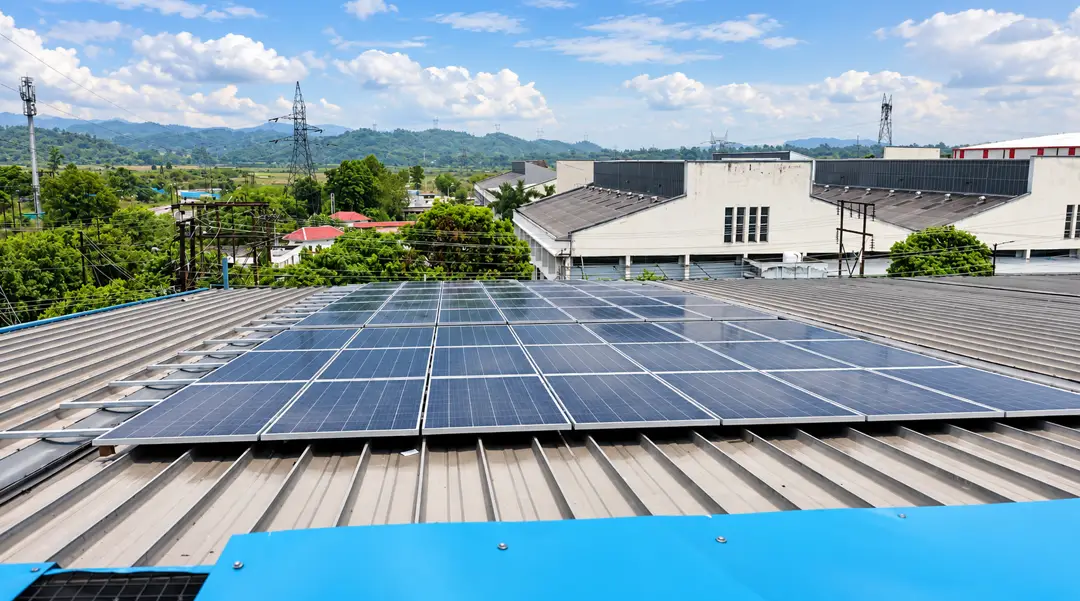
Somaya Solar Solutions Limited provides turnkey solar EPC solutions for commercial, industrial and large solar project requirements in Belgaum. Its documented MW-scale rooftop project experience includes equipment supply, installation, testing, commissioning and contracted operations and maintenance.
A turnkey solar EPC approach coordinates engineering, procurement, construction, installation and project handover through clearly defined responsibilities. For Belgaum-based businesses, effective project delivery requires alignment between equipment specifications, site readiness, electrical infrastructure, execution schedules and applicable grid requirements.
Somaya's project experience across paper manufacturing, fertilizer and other industrial facilities provides practical references for evaluating coordinated solar project execution. The exact turnkey responsibilities for each project are defined through its technical and commercial agreement.
Planning a Turnkey Solar EPC Project in Belgaum?
Share your project location, proposed capacity, facility requirements and available technical documents with Somaya Solar.
Request a Turnkey Solar EPC Project Scope Review
Turnkey Solar EPC Project Delivery for Businesses in Belgaum
Commercial and industrial solar projects involve coordination between facility owners, engineering teams, equipment suppliers, construction contractors and electrical specialists. A turnkey EPC arrangement provides a defined responsibility framework for the activities included in the project contract.
This approach helps align technical specifications, procurement, site execution, commissioning and handover. External approvals, maintenance obligations and responsibilities outside the agreed contract must be identified separately.
Coordinated Engineering and Execution Responsibilities
Engineering decisions influence equipment quantities, electrical configuration, mounting requirements and construction activities. The project delivery structure should establish how approved engineering inputs are passed into procurement and installation.
This helps prevent differences between equipment specifications, the actual site conditions and the work undertaken during construction.
Procurement and Construction Interface Management
Equipment deliveries need to be coordinated with site readiness and the approved installation sequence.
Procurement responsibilities should clearly identify which party supplies modules, inverters, mounting structures, cabling and other major components. The delivery plan should also address storage, inspection and installation dependencies.
Defined Commissioning and Handover Responsibility
Physical installation does not, by itself, establish that a solar plant is ready for operational handover.
The EPC contract should identify required testing, commissioning, acceptance conditions, documentation and the point at which project responsibilities transition to the owner or maintenance team.
Why Turnkey Solar EPC Responsibility Matters in Belgaum Projects
Belgaum commercial and industrial facilities can have complex ownership, electrical and operational arrangements. A well-defined turnkey contract can help clarify which responsibilities belong to the EPC contractor, the project owner and external parties.
Multi-Occupancy Commercial Properties
A commercial property may contain multiple tenants, electricity connections, rooftop installations or building-management responsibilities.
Before EPC work is contracted, the project owner should establish who controls the installation area, which electricity connection is relevant, what permissions or authorisations are required and who is responsible for each external interface.
Industrial Facilities with Ongoing Operations
At an operating industrial site, construction activities may need to be coordinated around equipment movement, production schedules, restricted areas and electrical shutdown requirements.
The turnkey proposal should identify installation access, construction sequencing, safety responsibilities and the process for coordinating site work with the facility team.
Projects with Multiple Electrical Interfaces
An existing commercial or industrial electrical system may involve transformers, distribution panels, different supply voltages or more than one electricity account.
The project scope should identify the proposed solar connection arrangement, integration responsibilities and the external technical requirements that affect commissioning.
Projects Requiring External Approvals
Utility approvals, electrical inspections, metering procedures and other regulatory activities can influence execution schedules.
The contract should distinguish between activities managed or coordinated by the EPC contractor and decisions controlled by the relevant authorities.
What Should Be Included in a Turnkey Solar EPC Contract?
For a Belgaum project owner, the most useful way to evaluate a turnkey offer is to review its responsibility matrix rather than relying only on the term end-to-end.
Project activity |
Responsibility to clarify |
|
Site assessment |
Who reviews site conditions and existing project documents? |
|
Engineering |
Who prepares, supplies or approves technical designs? |
|
Equipment procurement |
Who selects, purchases and delivers each major component? |
|
Structural and civil works |
Which surveys, designs and construction activities are included? |
|
Electrical integration |
Who handles cabling, protection, connection and related works? |
|
Utility coordination |
Which submissions and liaison activities are included? |
|
Testing and commissioning |
What tests and acceptance criteria apply? |
|
Documentation and handover |
Which records and deliverables are provided? |
|
Operations and maintenance |
What post-commissioning obligations apply? |
Two proposals may both be described as turnkey while allocating these activities differently.
A clear responsibility matrix allows the buyer to compare actual deliverables, exclusions, dependencies and contractual obligations before appointing the EPC contractor.
Belgaum Solar Policy, DISCOM and Grid Coordination in Turnkey Projects
Solar project delivery in Belgaum must account for the electricity connection, consumer category, proposed plant configuration and applicable regulatory requirements.
The Belgaum Electricity Regulatory Commission lists amendments issued during 2026, including the Net Metering for Renewable Energy Second Amendment Guidelines dated 16 July 2026 and Green Energy Open Access amendments dated 17 June 2026. Applicability depends on the individual project.
Defining DISCOM Responsibilities
A turnkey proposal should identify the party responsible for preparing documents, coordinating submissions, arranging technical information and supporting utility-related processes where applicable.
Government or utility approval decisions remain subject to the relevant authority. They cannot be guaranteed through a turnkey EPC contract.
Establishing Metering and Connection Requirements
Metering arrangements depend on the system configuration, electricity account and current regulations.
The project should not assume that a particular net-metering or group-net-metering arrangement is available before eligibility has been established.
Managing Approval Dependencies
External approvals can influence procurement decisions, electrical works and commissioning schedules.
The project plan should identify which activities depend on third-party decisions and how those dependencies affect the proposed execution sequence.
Turnkey Solar EPC Execution Process — From Project Requirement to Handover
For Belgaum project owners, a clearly documented delivery sequence can make it easier to monitor technical decisions, commercial commitments and completion milestones.
Project Assessment and Scope Definition
The initial stage identifies the proposed location, project capacity, electricity requirements, available rooftop or land area, existing technical information and intended delivery responsibilities.
The outcome should establish which further assessments are necessary before the EPC contract can be finalised.
Engineering and BOQ Coordination
The project engineering requirements are translated into the specifications, layouts and equipment schedules needed for procurement and execution.
Where included in the contract, this may involve engineering review and preparation or finalisation of a Bill of Quantities or Bill of Materials.
Equipment Procurement and Delivery
Approved specifications guide the procurement of modules, inverters, mounting structures, cables and other contracted components.
Equipment availability and delivery dates should be coordinated with site readiness and installation requirements.
Construction and Installation Management
Work activities are coordinated according to the approved execution sequence, site accessibility, material handling requirements and agreed safety arrangements.
For operating facilities, the plan may need to account for restricted work periods and business-continuity requirements.
Testing, Commissioning and Acceptance
The completed installation undergoes the agreed technical checks and commissioning activities.
The project close-out process should establish the acceptance requirements, handover documents, outstanding works and responsibilities that apply after commissioning.
Somaya Solar's Project Experience Relevant to Turnkey EPC Delivery
Somaya Solar's documented rooftop solar portfolio includes MW-scale projects across paper manufacturing, fertilizer and manufacturing facilities. Recorded activities include equipment supply, installation, testing, commissioning and contracted five-year maintenance arrangements.
The projects below demonstrate practical experience with installation scheduling, industrial environmental conditions and utility coordination. They are located outside Belgaum and do not independently establish that every turnkey EPC activity was included in their contracts.
Naini Papers Limited — 3 MW Rooftop Solar Project
Location: Kashipur, Uttarakhand Industry: Paper Manufacturing Recorded Scope: Supply, Installation, Testing and Commissioning with Five Years of O&M
The project had a two-month completion requirement. Multiple installation and commissioning teams operated in parallel to manage the execution schedule.
For a Belgaum buyer, the relevant lesson is the importance of coordinating manpower, construction activities and commissioning milestones when several project activities must progress within a limited time.
KRIBHCO — 2 MW Rooftop Solar Project
Location: Shahjahanpur, Uttar Pradesh Industry: Fertilizer Recorded Scope: Supply, Installation, Testing and Commissioning with Five Years of O&M
The industrial environment presented corrosion-related concerns associated with fertilizer fumes. Somaya's published project record describes the use of special coating on structures.
This example illustrates why engineering specifications and procurement decisions must account for the actual environment in which a solar plant will operate.
Luminous — 1 MW Rooftop Solar Project
Location: Haridwar, Uttarakhand Industry: Manufacturing Recorded Scope: Supply, Installation, Testing and Commissioning with Five Years of O&M
The project included a net-metering and DISCOM coordination challenge and is recorded as operational.
Its relevance to turnkey project owners lies in recognising utility coordination as a project interface that should be explicitly assigned within the delivery plan.
Turnkey Solar EPC vs Conventional Solar Installation
The distinction between turnkey EPC and conventional solar installation lies in the responsibilities defined by the contract.
Evaluation area |
Defined solar installation package |
Turnkey Solar EPC arrangement |
|
Primary responsibility |
Agreed physical installation activities |
Coordination of the contracted EPC lifecycle |
|
Engineering |
May be provided separately |
May be included within the EPC scope |
|
Procurement |
Equipment may be client-supplied |
Procurement responsibility can be integrated |
|
Site activities |
Installation-focused |
Construction and installation coordination |
|
Testing |
As defined in the installation contract |
Integrated with agreed commissioning scope |
|
Handover |
Installation completion and agreed records |
Defined project close-out and acceptance |
|
External coordination |
May remain with the client |
Allocated under the responsibility matrix |
|
O&M |
Separate unless included |
Separate or included as contractually agreed |
A turnkey model can provide a clearer interface structure, but its value depends on the actual contracted responsibilities rather than the service label.
What Determines the Cost of Turnkey Solar EPC Solutions in Belgaum?
The commercial value of a turnkey EPC contract depends on both the proposed solar capacity and the activities included in the price.
Important factors include equipment specifications, engineering responsibilities, mounting structures, structural or civil works, installation access, electrical integration, procurement logistics, testing, commissioning, documentation and maintenance.
For a commercial building, additional requirements may arise from shared property arrangements or restricted access. At industrial facilities, the execution scope may need to accommodate production schedules, elevated rooftops or existing electrical infrastructure.
A meaningful comparison should therefore examine the technical proposal, BOQ, responsibility matrix and exclusions together with the total contract amount.
Why Two Turnkey EPC Quotations May Differ
One quotation may include equipment procurement, structural interfaces, electrical integration and commissioning documentation, while another may exclude some of those activities.
The lower quotation is not necessarily the lower-cost complete project.
Before comparing prices, the buyer should establish that all proposals cover equivalent deliverables, equipment specifications, risk allocations and contractual obligations.
What Should a Turnkey Solar EPC Quotation Include?
A comparison-ready turnkey solar EPC quotation should clearly identify the proposed plant capacity, equipment specifications, engineering deliverables, procurement scope, civil and structural works, electrical integration, installation responsibilities, testing, commissioning and project handover requirements.
The proposal should also define warranty provisions, utility coordination, contractor and owner responsibilities, exclusions, and any separately contracted operations and maintenance activities.
Buyers should compare equivalent technical specifications and contractual deliverables rather than relying on the total project price alone.
How to Evaluate a Turnkey Solar EPC Contractor in Belgaum
A turnkey contractor should be evaluated on how clearly it can define, coordinate and contract for the proposed delivery responsibilities.
Relevant project experience matters, but so does the ability to provide a complete technical and commercial scope.
Project owners should review evidence of comparable execution, engineering documentation, procurement arrangements, subcontractor interfaces, construction planning, testing requirements and handover obligations.
The evaluation should also consider how the contractor proposes to manage changes, delays, third-party dependencies and any work excluded from its direct responsibility.
Preparing an RFQ for Turnkey Solar EPC Solutions in Belgaum
A detailed Request for Quotation helps contractors understand the actual project and prepares buyers to compare proposals consistently.
The initial RFQ can include the project location, industry or facility type, proposed plant capacity, available roof or land area, electricity consumption, existing electrical drawings, site constraints, project schedule and required scope.
It should also indicate whether the buyer requires equipment procurement, structural or civil work, DISCOM coordination, testing, commissioning, documentation and post-commissioning maintenance.
Where technical studies or approvals have already been completed, their status should be disclosed
Request a Turnkey Solar EPC Project Scope Review
Frequently Asked Questions About Turnkey Solar EPC in Belgaum
What are turnkey solar EPC solutions?
Turnkey solar EPC is a project delivery arrangement in which the agreed engineering, procurement, construction, testing, commissioning and handover responsibilities are coordinated through a primary EPC structure. Exact inclusions depend on the contract.
Does turnkey EPC include all solar project approvals?
Not automatically. Statutory, electrical and utility approvals must be addressed in the contractual responsibility matrix. Some activities may be coordinated by the EPC contractor, while formal decisions remain with the relevant authorities.
What is the difference between a solar EPC company and a turnkey EPC provider?
A solar EPC company provides engineering, procurement and construction services. Turnkey describes how an agreed project scope is coordinated and delivered, typically with defined responsibility extending through commissioning and handover.
Can turnkey EPC be used for commercial and industrial rooftops in Belgaum?
Yes. A turnkey delivery structure can be suitable for commercial and industrial rooftop projects where the owner wants coordinated responsibilities across several technical and execution activities. Site feasibility and the exact contractual scope still need to be established.
Does Somaya Solar have experience delivering MW-scale solar projects?
Somaya's updated project portfolio records rooftop projects of 3 MW at Naini Papers, 2 MW at KRIBHCO and 1 MW at Luminous, involving supply, installation, testing and commissioning with five-year O&M commitments. These projects are outside Belgaum.
Does turnkey solar EPC include operations and maintenance?
Operations and maintenance may be included or contracted separately. Somaya has documented projects with five-year O&M commitments, but the duration and scope for a new project should be defined in its agreement.
Who is responsible for engineering drawings and project documentation?
The responsible party depends on the contract. The EPC proposal should identify which drawings, calculations, specifications, BOQs, testing records and handover documents are included, and who must prepare or approve them.
How long does a turnkey solar EPC project take in Belgaum?
The schedule depends on capacity, project readiness, engineering, procurement, construction requirements, site access and utility-related dependencies. A reliable completion programme requires project-specific evaluation.
How is a turnkey EPC quotation different from a solar installation quotation?
A turnkey quotation may cover several coordinated project work packages, while an installation quotation may be limited to defined physical works. Comparing the BOQ, responsibilities and exclusions is more useful than comparing prices alone.
What should be checked before signing a turnkey EPC agreement?
The agreement should clearly identify technical deliverables, equipment specifications, responsibilities, exclusions, execution schedule, testing requirements, acceptance criteria, warranties and any O&M commitments.
Discuss Your Turnkey Solar EPC Project in Belgaum
Planning a commercial, industrial or large solar installation that requires coordinated engineering, procurement and execution?
Share your project location, proposed capacity, facility details, available technical documentation and delivery requirements with Somaya Solar Solutions Limited.
A clearly defined project requirement helps establish the scope, interfaces and responsibilities that need to be addressed in the EPC proposal.
Share Your Turnkey Solar EPC Requirement
Email: info@somayasolar.com Phone: +91 8700035846 / +91 9873079758