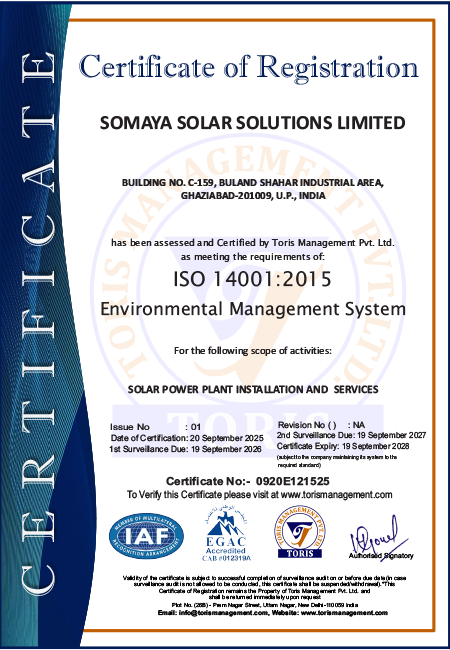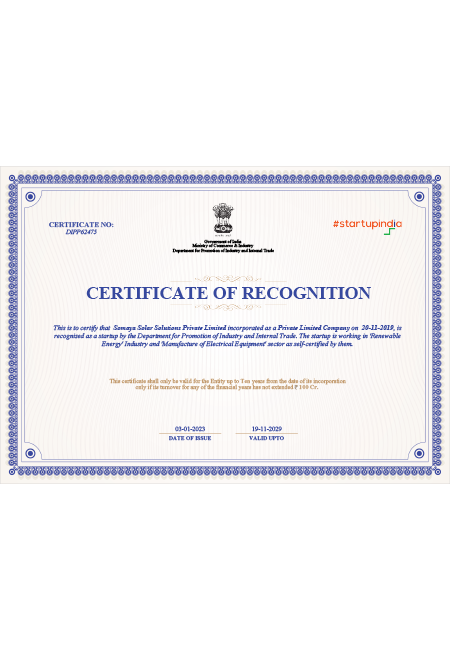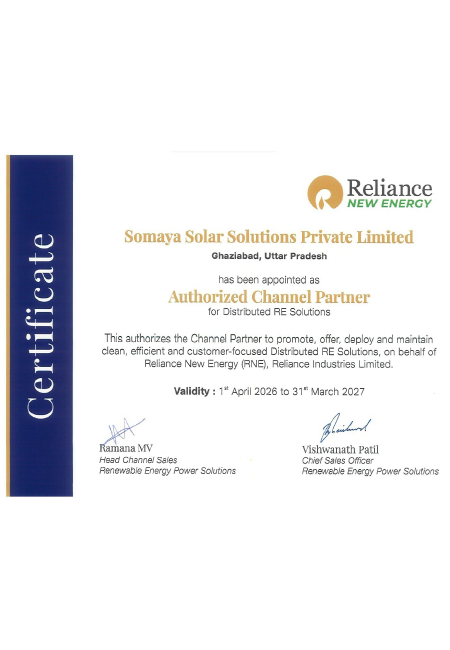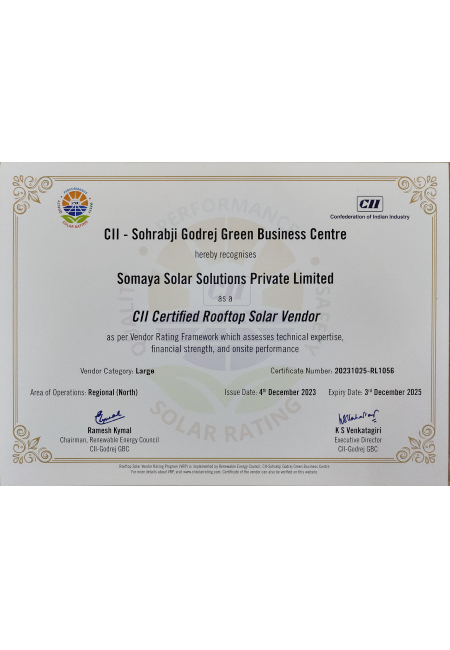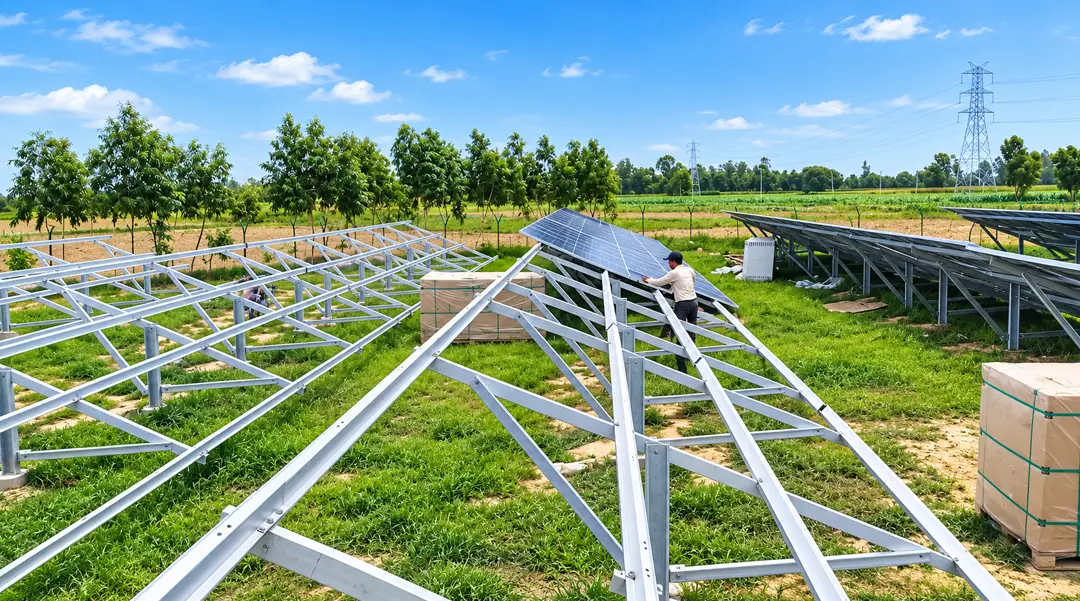
Somaya Solar Solutions Limited supports ground-mounted solar power plant installation requirements for Bikaner-based project developers, industrial organisations and infrastructure businesses. The company's documented MW-scale project experience includes equipment supply, installation, testing and commissioning.
Ground-mounted solar projects require suitable land, mounting structures, electrical infrastructure, construction access and a feasible grid connection. Within Bikaner, land availability and permitted land use are particularly important considerations before a project moves towards execution.
Somaya's recorded ground-mounted project experience includes installations in Katni, Amroha and Hazira. These projects are outside Bikaner and demonstrate company-wide execution experience rather than completed projects within Bikaner.
Planning an MW-Scale Solar Project?
Planning a ground-mounted solar project? Share the proposed site location, usable land area, intended capacity and project requirements to begin a technical-scope discussion.
Request a Ground-Mounted Solar Project Scope Review
Why Consider Somaya Solar for Ground Mounted Solar Installation?
Somaya Solar's recorded portfolio includes ground-mounted solar projects with capacities of 1 MW and 2.4 MW. Its documented execution scope covers equipment supply, installation, testing and commissioning.
The Katni project involved DISCOM coordination for a transmission-line-related requirement, while the Amroha project encountered construction-access challenges. The Hazira project includes a documented five-year operations and maintenance commitment.
These references demonstrate experience with practical project execution requirements. The exact engineering, civil, electrical, approval and maintenance responsibilities for a new project must be established in the project-specific agreement.
Ground Mounted Solar Power Plant Development in Bikaner — What Should Project Owners Know?
A ground-mounted solar power plant in Bikaner must be evaluated against available land, permitted land use, site accessibility, foundation requirements and electrical connectivity. These conditions determine whether a proposed location is technically suitable for installation.
For Bikaner-based organisations considering a plant in another state, the generating location and electricity-use arrangement introduce additional regulatory and commercial considerations.
Ground Mounted Solar Projects Within Bikaner
A ground-mounted solar installation with in Bikaner requires a suitable site with sufficient usable land, appropriate development permissions, practical construction access and a feasible electrical connection.
Land ownership or availability alone does not confirm whether a solar plant can be constructed. Project owners need to establish permitted land use, site restrictions, utility infrastructure and the applicable approval requirements before making equipment or construction commitments.
For many densely developed properties, suitable land for a dedicated ground-mounted array may be limited. A site-specific assessment is therefore essential before selecting ground-mounted solar instead of an alternative installation approach.
Ground Mounted Solar Projects Outside Bikaner for Bikaner-Based Organisations
Some Bikaner-based businesses may evaluate solar generation from a plant located outside the National Capital Territory.
In this situation, the location of the solar plant, connection to the electricity network and proposed commercial use of generated power become separate considerations.
Any captive, open-access or power-purchase arrangement requires evaluation under the rules applicable to the generating location, consumer and electricity transaction. Ground-mounted EPC execution experience should not be interpreted as confirmation that Somaya provides project financing, asset ownership or electricity-sale arrangements.
Why Land Feasibility Matters Before Capacity Selection
For a Bikaner ground-mounted solar enquiry, identifying a proposed plant capacity is only one part of project planning.
The land must also accommodate module rows, mounting foundations, electrical equipment, internal movement, drainage, access clearances and future maintenance.
A proposed MW capacity cannot be confirmed solely from the total area mentioned in a land document. The actual usable area and project layout determine what can realistically be developed.
Site Suitability for Ground Mounted Solar Installation in Bikaner
Ground-mounted solar site suitability depends on usable land area, permitted land use, soil and drainage conditions, construction access and electrical connectivity. A site should be assessed against these requirements before finalising the proposed plant capacity, foundation approach or installation layout.
Land Area, Shape and Boundaries
The available land must be assessed for usable area rather than gross plot size alone.
Irregular boundaries, setbacks, existing structures, access corridors and restricted zones can reduce the area available for solar arrays. These factors can also influence module orientation, row spacing and equipment placement.
Land Use and Development Permissions
The proposed site must be assessed against applicable land-use and development requirements.
Within Bikaner, the planning framework, land ownership conditions and restrictions applying to the particular plot can materially affect feasibility.
A solar installation proposal should not assume that privately owned, agricultural or vacant land is automatically eligible for solar power plant development.
Topography and Drainage
Land slope, uneven ground, low-lying areas and drainage conditions can affect foundation engineering and construction requirements.
A site with poor drainage may need a different layout or additional site-development provisions from a level property with suitable natural drainage.
Soil and Foundation Conditions
The selected mounting arrangement must transfer structural forces safely into the ground.
Depending on the site, foundation engineering may require information about soil-bearing conditions, groundwater, rock depth, corrosion exposure and other geotechnical characteristics.
The need for specific surveys, investigations and engineering deliverables should be established in the agreed project scope.
Construction and Maintenance Access
Ground-mounted solar construction requires access for workers, equipment, solar modules, structural materials and electrical components.
Internal routes should also support future inspection, vegetation management, equipment replacement and maintenance activities where required.
A site may have adequate land area but still face execution challenges because of restricted approach roads or difficult material movement.
Ground Mounted Solar Plant Engineering and Installation Considerations
Ground-mounted plant execution involves several technical interfaces that must work together.
The engineering approach should reflect the land characteristics, proposed plant capacity, equipment configuration and requirements at the electrical connection point.
Solar Array Layout and Orientation
The solar array layout determines how modules are arranged across the available land.
Module dimensions, tilt, orientation, row spacing, shading, equipment locations and maintenance access all influence the layout.
The final configuration should balance usable area, technical performance, structural requirements and construction practicality.
Solar Module Mounting Structures
Module Mounting Structures (MMS) provide the structural support for ground-mounted PV arrays.
Their design may need to account for wind loads, foundation interfaces, corrosion exposure, ground clearance and maintenance access.
Structure materials and configurations should follow approved engineering specifications rather than a standard design assumed suitable for every site.
Ground Mounted Solar Foundations
Foundation selection depends on site conditions and structural requirements.
Common engineering approaches include driven piles, concrete foundations and other site-specific systems. Their suitability depends on the soil, loading conditions, foundation design and construction constraints.
The selected approach should be supported by appropriate technical investigation and engineering responsibility.
Fixed-Tilt and Solar Tracking Systems
Fixed-tilt mounting keeps solar modules at a predetermined angle. Solar tracking systems adjust module orientation to follow the sun.
The two approaches differ in structural requirements, equipment complexity, maintenance and project economics.
Tracker-based execution should only be included where specifically approved and covered by the project's technical scope.
Electrical Infrastructure and Grid Connectivity for Ground Mounted Solar Plants
Electrical integration is a major part of evaluating a ground-mounted solar power plant, particularly where the proposed site and electricity consumer are located in different areas.
The electrical design may need to address inverter configuration, DC and AC cabling, transformers, protection systems, earthing, lightning protection, metering and connection infrastructure.
Grid Connection and Evacuation Planning
A grid-connected ground-mounted solar project needs a clearly defined connection arrangement.
The project team may need to evaluate connection-point distance, voltage level, network capacity, evacuation infrastructure, metering requirements and coordination with the applicable utility.
The actual grid-connection requirements depend on where the power plant is located and how the electricity will be used.
Transmission and Electrical Routing
Cable routes, trenching, equipment placement and any transmission-line interface can affect project cost and implementation.
A short physical distance to electrical infrastructure does not automatically mean that a technically or commercially suitable connection is available.
Responsibility for evacuation works, approvals, utility liaison and grid synchronisation should be established before the final contract is agreed.
Testing and Commissioning
Testing and commissioning activities verify that the completed installation meets the agreed technical and electrical requirements.
The specific checks and acceptance process depend on the equipment, plant configuration, contractual scope and applicable grid requirements.
Ground Mounted Solar Power Plant Execution Scope
Somaya Solar's documented ground-mounted project experience covers equipment supply, installation, testing and commissioning. For a new project, the technical proposal should clearly identify the responsibilities assigned to Somaya and other parties, including engineering, site preparation, civil works, electrical infrastructure, grid coordination and operations and maintenance where applicable.
Equipment Supply
Solar modules, mounting structures and electrical equipment are supplied according to the approved project specifications and agreed procurement scope.
Site Preparation and Civil Interfaces
Depending on the project, site-related works may involve land preparation, foundation construction, equipment bases, cable routes, drainage interfaces and internal access provisions.
The exact civil package and responsibility for each activity must be established before execution.
Ground Mounted Solar Installation
Installation activities can include mounting structures, PV modules, DC and AC electrical systems and other components covered by the approved technical package.
Testing and Commissioning
Completed plant systems undergo the testing and commissioning activities defined in the contract and applicable technical requirements.
Operations and Maintenance
Somaya's documented 1 MW KRIBHCO ground-mounted project at Hazira includes five years of O&M.
For any new ground-mounted project, maintenance duration, service scope and post-commissioning responsibilities should be agreed separately.
Ground Mounted Solar Project Execution Process
The following stages describe a practical project evaluation and execution sequence, not a promise that every stage is included in Somaya’s standard contract.
Stage 1 — Project Brief and Site Feasibility
Define plot location and ownership status, intended power use, available land, likely capacity and major site constraints. Identify which studies and permissions the developer must arrange.
Stage 2 — Engineering Scope and Responsibility Matrix
Agree responsibility for surveys, plant layout, mounting and foundations, electrical configuration, evacuation infrastructure and approval documentation before finalising the commercial scope.
Stage 3 — Equipment, Site Readiness and Installation
Confirm approved equipment, procurement responsibilities, access, construction schedule, foundation interfaces and the installation activities assigned to each contractor.
Stage 4 — Electrical Checks, Testing and Commissioning
Carry out inspections and commissioning within the agreed scope, including any utility-facing requirements, acceptance records and defined handover documentation.
Stage 5 — Handover and Contracted Maintenance
Define as-built records, warranties, O&M responsibilities, service period and exclusions. Somaya’s recorded Hazira project includes five years of O&M; this is not a blanket duration for future contracts.
Somaya Solar's Ground Mounted Solar Project Experience
For Bikaner-based project owners evaluating a ground-mounted solar company, actual execution experience is an important consideration.
Somaya's updated national service portfolio includes projects demonstrating experience with land-based installation, construction access, utility coordination and commissioning.
These company-wide project references are outside Bikaner. They demonstrate recorded execution experience, not completed Bikaner project history. Individual project photographs, public client references and latest status should be attached only after verification.
2.4 MW Ground Mounted Solar Project — Katni, Madhya Pradesh
Project: KUSUM-C — Ram Sati Devi Capacity: 2.4 MW Location: Katni, Madhya Pradesh Recorded Scope: Supply, Installation, Testing and Commissioning Recorded Status: Operational
The project involved a transmission-line-related execution challenge. Somaya's recorded response included coordination with the local DISCOM.
This experience is relevant to ground-mounted projects where the electrical connection interface requires coordination beyond the physical installation of solar modules.
2.4 MW Ground Mounted Solar Project — Amroha, Uttar Pradesh
Project: KUSUM-A — Bhavnath Singh Capacity: 2.4 MW Location: Amroha, Uttar Pradesh Recorded Scope: Supply, Installation, Testing and Commissioning Last Recorded Status: Work in Progress
The project faced site-access challenges, requiring local support to facilitate access to the installation location.
It demonstrates why construction accessibility should be evaluated before committing to equipment delivery and installation schedules.
1 MW Ground Mounted Solar Project — Hazira, Gujarat
Project: KRIBHCO Industry: Fertilizer Capacity: 1 MW Location: Hazira, Gujarat Recorded Scope: Supply, Installation, Testing, Commissioning and Five Years of O&M Recorded Status: Operational
The project record identifies the completion schedule as an execution challenge.
This example demonstrates Somaya's ground-mounted installation and commissioning experience, together with a documented post-commissioning maintenance commitment.
Ground Mounted Solar vs Rooftop Solar for Bikaner Projects
Ground-mounted and rooftop solar systems serve different physical site requirements. In Bikaner, this distinction is particularly relevant because suitable open land may be difficult to secure.
Factor |
Ground Mounted Solar |
Rooftop Solar |
|
Installation area |
Suitable open land |
Existing building rooftop |
|
Primary structural concern |
Soil, foundations and ground conditions |
Roof load capacity and building structure |
|
Land requirement |
Dedicated usable land |
Existing rooftop area |
|
Layout flexibility |
Depends on plot shape, restrictions and terrain |
Limited by rooftop features and geometry |
|
Construction access |
Site roads, equipment movement and ground works |
Rooftop access, lifting and occupied-building constraints |
|
Capacity potential |
Can support larger arrays where land permits |
Limited by usable roof area |
|
Bikaner-specific consideration |
Land availability and permitted use |
Roof feasibility and electricity connection |
For Bikaner projects, the appropriate installation approach depends on the availability of suitable land or rooftop space, structural conditions, electricity requirements and the proposed electrical connection. Neither option should be selected solely on the basis of nominal plant capacity.
For businesses with suitable building rooftops but insufficient open land, commercial or industrial rooftop installation may deserve separate evaluation.
Somaya's related service: Commercial & Industrial Solar Installation.
Ground Mounted Solar vs Utility Scale Solar Power Plants
A ground-mounted solar plant is defined by its physical installation on land. A utility-scale solar project is generally defined by its generation purpose, capacity and electricity-network context.
A ground-mounted project may serve an industrial consumer, be developed under a government programme or form part of a larger electricity-generation arrangement. It is not automatically a utility-scale development.
Similarly, a 1 MW or 2.4 MW ground-mounted installation should not be described as utility scale without supporting project classification.
Project owners evaluating centralised generation and larger grid-connected developments can also review Somaya's Utility Scale Solar Power Plant Installation service.
Ground Mounted Solar Project Cost in Bikaner
The cost of a ground-mounted solar power plant in Bikaner depends on plant capacity, usable land conditions, foundation design, equipment selection, electrical infrastructure and grid-connection requirements. A reliable project estimate requires a defined site, capacity basis and scope of work. Land acquisition, statutory charges and external evacuation infrastructure may be priced separately.
Project cost component |
Key considerations |
|
Land-related requirements |
Ownership, permitted use, site readiness and development restrictions |
|
Surveys and engineering |
Topography, geotechnical requirements and engineering scope |
|
Civil and foundation works |
Site preparation, foundation type, roads and drainage |
|
Solar equipment |
Module and inverter specifications |
|
Mounting structures |
Fixed-tilt or approved alternative configuration |
|
Electrical installation |
DC/AC cabling, protection and equipment |
|
Grid connection |
Connection infrastructure, metering and evacuation requirements |
|
Project logistics |
Transport, site accessibility and material handling |
|
Commissioning and O&M |
Testing, handover and contracted maintenance |
For Bikaner-based organisations evaluating projects outside the city, land location, transmission arrangements and the applicable commercial model may have an additional influence on financial feasibility.
A project-specific technical and commercial proposal is therefore necessary before estimating the investment accurately.
What to Include in a Ground Mounted Solar Quotation
Request an itemised scope covering engineering and surveys, site preparation, foundations, mounting structures, modules, inverters, cabling, protection, grid-related works, testing, commissioning and contracted O&M. The quotation should indicate whether land cost, statutory fees, external evacuation assets, taxes, civil extras and utility charges are included or excluded.
A price per MW without site and interconnection assumptions is not directly comparable across projects. Ask contractors to state capacity basis (MWp or MWac), site assumptions, schedule, deliverables and validity before comparing proposals.
How to Evaluate a Ground Mounted Solar EPC Contractor in Bikaner
A suitable ground-mounted solar contractor should be assessed on demonstrated project execution rather than general solar installation claims alone.
Project owners should examine comparable project capacities, actual site conditions, recorded responsibilities, installation challenges and commissioning experience.
The technical proposal should clearly establish who is responsible for land assessment, engineering inputs, foundation works, equipment procurement, construction, electrical systems, utility coordination and testing.
Where the developer intends to use generated electricity through a captive, open-access or third-party arrangement, the separate legal and commercial responsibilities should also be established.
Somaya's published ground-mounted project records provide examples involving access restrictions, DISCOM liaison and post-commissioning maintenance. These are relevant references for evaluating practical execution capabilities.
Ground Mounted Solar Feasibility Checklist for Bikaner-Based Buyers
Before requesting a final commercial proposal, confirm: (1) plant site is inside Bikaner or in another state; (2) ownership and permitted land use; (3) usable land area, access and drainage; (4) intended electricity consumption or offtake; (5) potential grid connection and evacuation distance; (6) required surveys and foundation inputs; (7) approvals and statutory responsibility; and (8) agreed equipment, installation and O&M scope.
For projects outside Bikaner serving a Bikaner-based consumer, assess open-access or captive arrangements separately through relevant legal and utility advisers. Physical installation capability should not be confused with financing, electricity trading or guaranteed regulatory eligibility.
Have a site or tender document ready? Submit site details or an RFQ at https://somayasolar.com/contact-us.
Information Required for a Ground Mounted Solar Project Enquiry
For a more focused technical discussion, share your proposed project location, available land area, intended plant capacity, electricity-use arrangement and current development stage.
Where available, also provide land documents, site layouts, survey reports, grid-connection information and any existing RFQ or tender specifications.
These details will help define the technical assessment requirements and the scope of the proposed installation.
Useful inputs include:
- Proposed installation location, including whether the land is inside or outside Bikaner
- Available land area and ownership or possession status
- Proposed plant capacity, if established
- Intended use of generated electricity
- Available site layout, survey or land documents
- Existing site access and physical constraints
- Nearest known electricity infrastructure or proposed connection point
- Project development stage and anticipated timeline
- Required supply, installation, commissioning and other contractual responsibilities
- Available RFQ, tender or technical specifications
The purpose of collecting these details is to identify the project's likely engineering, development and commercial dependencies before defining the execution scope.
Frequently Asked Questions About Ground Mounted Solar Power Plants in Bikaner
Can a ground mounted solar power plant be installed in Bikaner?
A ground-mounted solar plant may be technically possible on an appropriate site, but feasibility depends on available land, permitted use, technical suitability and applicable approvals. Bikaner's land constraints make site-specific assessment particularly important. Land availability alone does not establish approval or project viability.
How much land is required for a 1 MW ground mounted solar plant?
Early planning estimates may use approximately 4–5 acres per MW for conventional configurations, but this is not a universal engineering requirement. Actual area depends on module configuration, row spacing, terrain, equipment placement and access provisions. The final requirement must be determined from the project layout.
Can a Bikaner-based company develop a ground mounted solar plant outside Bikaner?
A Bikaner-based company may evaluate a plant at another location, but its development and electricity-use arrangements depend on the generating site, consumer location and applicable regulations. Captive or open-access eligibility and charges must be examined separately.
Does Somaya Solar have experience in ground mounted solar power plants?
Somaya's published project portfolio includes 2.4 MW ground-mounted projects at Katni and Amroha, as well as a 1 MW project at Hazira. The documented scope includes supply, installation, testing and commissioning.
What is the difference between ground mounted and rooftop solar?
Ground-mounted systems use dedicated land and foundations, while rooftop systems are installed on existing buildings. Both require engineering assessment, but their site, structural, construction and maintenance considerations differ.
Are ground mounted solar plants suitable for industrial captive consumption?
They can be considered for captive requirements where the proposed site, electrical connection and commercial arrangement are suitable. Captive qualification, connection permissions and other requirements must be evaluated under the applicable regulations.
What foundation types are used in ground mounted solar installations?
Common approaches include driven piles, concrete foundations and other engineered foundation systems. The choice depends on soil characteristics, structural loads, ground conditions and approved engineering requirements.
How long does a ground mounted solar project take to complete?
Completion depends on land readiness, engineering, procurement, foundation work, construction access, grid-related requirements and commissioning. A reliable schedule should be established from the actual project scope rather than a generic promise.
Does a ground mounted solar contractor handle DISCOM approvals?
Responsibilities vary by contract. A contractor may provide defined utility coordination or documentation support, but the exact approvals, liaison activities and grid-connection obligations must be stated in the agreed scope.
What affects the cost of a 2 MW or 5 MW ground mounted solar power plant?
Key variables include land characteristics, plant design, equipment, mounting structures, civil works, electrical systems, connection infrastructure, logistics and maintenance. Project cost should be evaluated against a defined site and scope.
Can ground mounted solar plants use tracking systems?
Tracking configurations may be considered where their technical and financial benefits justify the additional mechanical and operational complexity. Their inclusion depends on project-specific engineering and contractual agreement.
Does Somaya provide operations and maintenance for ground mounted solar plants?
Somaya's published 1 MW KRIBHCO ground-mounted project includes a five-year O&M commitment. Maintenance terms for new projects are determined separately through the relevant contract.
What should be checked before buying land for a ground mounted solar plant near Bikaner?
Check permitted land use, actual usable acreage, access and drainage, preliminary geotechnical constraints, nearby grid infrastructure and the applicable approval pathway. Land ownership alone does not establish solar-project feasibility.
What should a ground mounted solar EPC quotation include?
A comparison-ready quotation should specify capacity basis, scope of supply, civil and foundation works, electrical infrastructure, evacuation boundaries, commissioning, warranties, O&M, exclusions and responsibility for statutory processes.
Which documents are useful for initial feasibility review?
Share site location, plot survey or layout, land documents, access photographs, intended plant capacity, electricity-use model, existing connection information and an RFQ or tender where available. The project team can then identify further technical inputs.
Can electricity from a plant outside Bikaner be used by a Bikaner-based industrial consumer?
Potentially, depending on the generating state, consumer location, connection and applicable captive or open-access rules. Eligibility, charges, permissions and agreements require separate project-specific verification.
Discuss Your Ground Mounted Solar Power Plant Requirement in Bikaner
Planning a ground-mounted solar power plant or evaluating a land-based solar installation for your organisation?
Share your proposed project location, usable land area, expected capacity, development stage and technical requirements with Somaya Solar Solutions Limited. These details can help identify the installation scope and project-specific considerations that need further evaluation.
Request a Ground-Mounted Solar Project Scope Review
Email: info@somayasolar.com
Phone: +91 8700035846 / +91 9873079758